
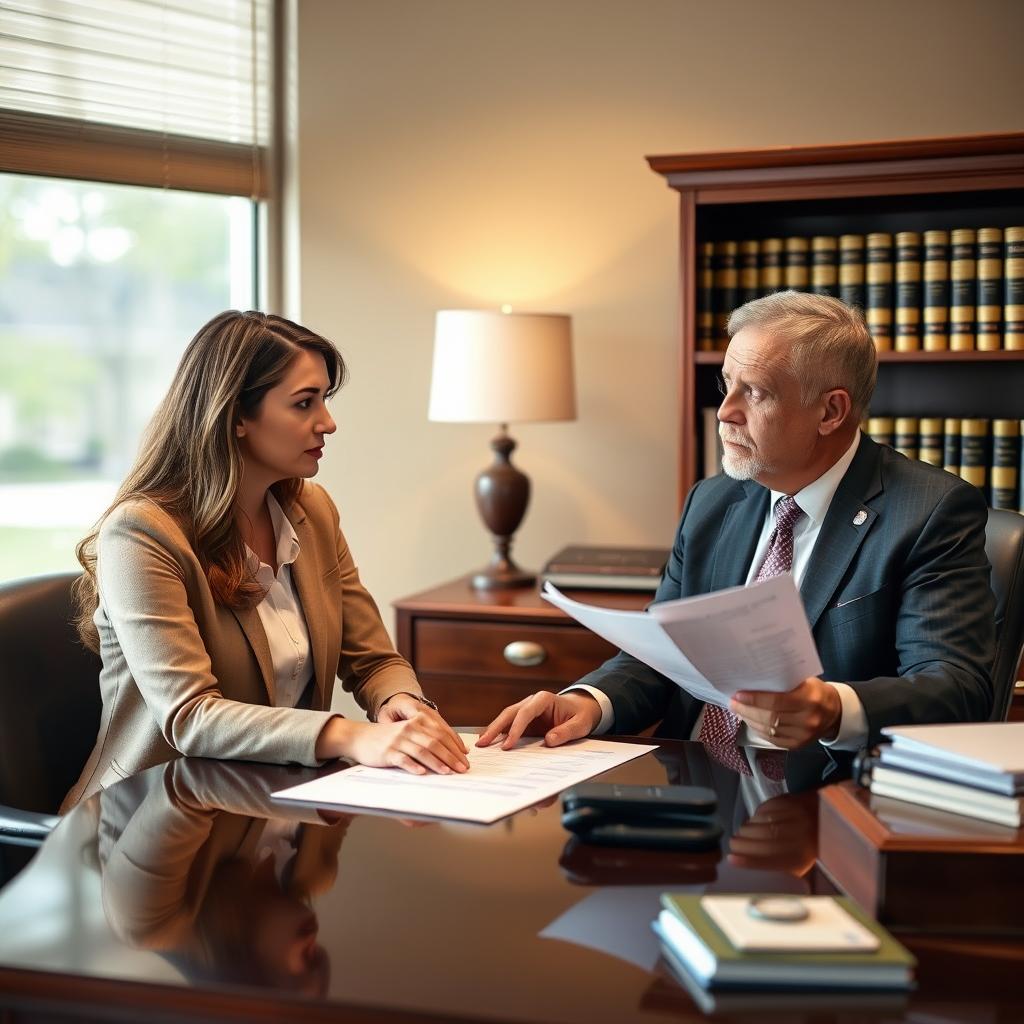
Commercial Leasing Lawyer Virginia
You need a Commercial Leasing Lawyer Virginia to protect your business interests in a complex contract. Law Offices Of SRIS, P.C.—Advocacy Without Borders. provides direct counsel on Virginia commercial lease law. We draft, review, and negotiate agreements for Location, retail, and industrial space. Our team enforces tenant rights and handles lease disputes across the Commonwealth. (Confirmed by SRIS, P.C.)
Statutory Definition of Virginia Commercial Lease Law
Virginia commercial lease law is primarily governed by the Virginia Residential Landlord and Tenant Act (VRLTA) for certain dwellings and common law contract principles for most commercial spaces. The VRLTA, specifically § 55.1-1200 et seq., does not automatically apply to most commercial tenancies. Most commercial leases in Virginia are treated as contracts under the common law. This means the written lease agreement is the controlling document. Virginia courts strictly enforce the terms of a commercial lease as written. This places a heavy burden on the business tenant to understand every clause. A Commercial Leasing Lawyer Virginia is essential to handle this contractual area. They ensure your rights are protected before you sign.
Virginia Code § 55.1-1200 defines key terms but its application to commercial property is limited. For most commercial leases, Virginia common law and the Uniform Commercial Code (UCC) for goods attached to the property (fixtures) control. The maximum exposure for breach is dictated by the lease terms, not a statutory penalty. This can include full rent due for the lease term, damages, and attorney’s fees.
What statutes govern a commercial lease in Virginia?
Most commercial leases are governed by Virginia common law of contracts, not specific statutes. The Virginia Uniform Commercial Code (UCC), particularly Article 2A on leases of goods, may apply to equipment leases or fixtures. Local county or city ordinances regarding zoning, building codes, and business licenses are also critical. A commercial lease agreement lawyer Virginia must review all applicable layers of regulation.
How does Virginia law treat lease commitments?
Virginia law enforces personal and corporate commitments as written in the lease. Guarantors are often jointly and severally liable for the full lease obligation. Courts rarely relieve a guarantor of liability absent fraud or duress. A lawyer can negotiate the scope and limits of a commitment before signing.
What are the rules for security deposits in commercial leases?
Virginia law does not statutorily regulate commercial lease security deposits. The lease agreement controls the amount, handling, and return conditions. Landlords typically have broad discretion to apply the deposit to any breach. Negotiating clear deposit terms is a primary function of a commercial lease attorney.
The Insider Procedural Edge in Virginia Courts
Commercial lease disputes in Virginia are heard in the General District Court or Circuit Court depending on the amount in controversy. For claims under $25,000, file in the General District Court for the city or county where the property is located. For claims exceeding $25,000, the case must be filed in the corresponding Circuit Court. The procedural timeline is fast-paced, with strict pleading and discovery deadlines. Missing a deadline can forfeit critical rights or defenses. SRIS, P.C. has extensive experience in Virginia civil courts handling these precise procedures.
What is the typical timeline for a commercial eviction in Virginia?
A commercial eviction, or unlawful detainer, can proceed rapidly in Virginia. After a proper pay-or-quit notice, a court hearing can be scheduled within weeks. A judgment for possession can be executed quickly by the sheriff. Tenants must act immediately upon receiving any notice to preserve defenses.
The legal process in virginia follows specific procedural requirements that affect case timelines and outcomes. Courts in this jurisdiction apply local rules that may differ from neighboring areas. An attorney familiar with virginia court procedures can identify procedural advantages relevant to your situation.
Where do you file a breach of commercial lease lawsuit?
You file a lawsuit for breach of a commercial lease in the General District or Circuit Court for the city or county where the leased property is located. Jurisdiction is based on the physical location of the real estate. The specific courthouse address is determined by that locality. Procedural specifics for Virginia are reviewed during a Consultation by appointment at our Virginia Locations.
Penalties & Defense Strategies for Lease Disputes
The most common penalty in a commercial lease dispute is a monetary judgment for unpaid rent and damages. The lease itself dictates the penalties for breach, which can be severe. Tenants can be held liable for the full remaining rent due under the lease term. Landlords have a duty to mitigate damages in Virginia, but the burden is often on the tenant to prove they failed to do so. Defenses include landlord breach of covenant, constructive eviction, or failure to mitigate. An Location space lease lawyer Virginia builds a defense based on the lease language and Virginia case law.
Virginia law establishes specific statutory frameworks that govern these matters. Each case involves unique factual circumstances that require careful legal analysis. SRIS, P.C. attorneys evaluate every relevant factor when developing case strategy for clients in virginia.
| Offense / Breach | Potential Penalty | Notes |
|---|---|---|
| Non-Payment of Rent | Judgment for full arrears + late fees + interest | Landlord can file for eviction simultaneously. |
| Holdover Tenancy | Liability for double rent under VA Code § 55.1-217 | Applies after lease term expires if tenant remains. |
| Breach of Covenant | Monetary damages + injunctive relief + attorney’s fees | e.g., unauthorized use, failure to maintain. |
| Property Damage | Cost of repair/replacement + diminished value | Beyond normal wear and tear as defined in lease. |
| Failure to Mitigate | Landlord’s claim for damages may be reduced | Tenant must prove landlord did not re-let space. |
[Insider Insight] Virginia judges heavily favor the plain language of the signed lease. Local prosecutors are not involved in civil lease disputes. The trend in Virginia courts is to enforce commercial leases as strict business contracts. Sentiment or hardship arguments rarely succeed. Your defense must be rooted in the contract’s text or a recognized legal doctrine.
Can a landlord seize business property for unpaid rent?
A commercial landlord in Virginia generally cannot seize a tenant’s personal property without a court order. The lease may contain a “landlord’s lien” clause granting that right. Even with a lien clause, the landlord must follow strict statutory distress warrant procedures. Self-help eviction or seizure is illegal and can result in tenant counterclaims.
What are the defenses against a full rent claim after moving out?
The primary defense is the landlord’s failure to mitigate damages by re-letting the space. The tenant must show the landlord did not make reasonable efforts to find a new tenant. Other defenses include the landlord’s prior material breach or constructive eviction making the space unusable. Evidence is critical for these defenses.
Court procedures in virginia require proper documentation and adherence to filing deadlines. Missing a deadline or submitting incomplete filings can negatively impact case outcomes. Working with an attorney who handles cases in virginia courts regularly ensures that procedural requirements are met correctly and on time.
Why Hire SRIS, P.C. for Your Virginia Commercial Lease
SRIS, P.C. provides focused advocacy for business tenants and landlords across Virginia. Our attorneys understand that a commercial lease is the foundation of your business operation. We approach each lease as a critical business document requiring precision and foresight. Our goal is to secure terms that support your business growth and limit your liability.
Attorney Background: Our Virginia commercial leasing attorneys have direct experience negotiating and litigating complex lease agreements. They have handled disputes involving Location towers, retail centers, industrial warehouses, and medical suites. This practical experience informs our proactive drafting and review process to avoid future conflicts.
We have achieved favorable results for clients in lease renegotiations, early termination disputes, and build-out allowance conflicts. Our team knows the local court procedures and the judges who hear these cases. We prepare every case with the understanding that it could go to trial. You need a firm that is not afraid to advocate for you in court. SRIS, P.C. provides that assertive representation. For related legal support, consider our Virginia family law attorneys for business-related family matters or criminal defense representation for any tangential issues.
The timeline for resolving legal matters in virginia depends on multiple factors including case type, court scheduling, and the positions of all parties involved. SRIS, P.C. keeps clients informed throughout the process and works to move cases forward as efficiently as possible.
Localized Virginia Commercial Leasing FAQs
What is the difference between a gross lease and a net lease in Virginia?
In a gross lease, the tenant pays a flat rent covering all property costs. In a net lease (single, double, or triple), the tenant pays base rent plus additional costs like taxes, insurance, and maintenance. Most Virginia commercial leases are a form of net lease, shifting operational costs to the tenant.
Can a landlord prohibit a business sale or assignment in Virginia?
Yes, if the lease contains an absolute prohibition on assignment or subletting. Virginia courts enforce these clauses. Most leases require landlord consent for an assignment, which cannot be unreasonably withheld. A well-negotiated lease will define “reasonable” standards for consent.
Who is responsible for repairs in a Virginia commercial lease?
The lease agreement dictates repair responsibilities. Typically, tenants maintain the interior and landlords maintain structural elements and common areas. The specific division of responsibilities for HVAC, plumbing, and roof must be explicitly stated in the lease document to avoid dispute.
Financial implications are often a significant concern in legal proceedings. Virginia courts consider relevant financial factors when making determinations. Proper preparation of financial documentation strengthens your position and supports favorable outcomes in virginia courts.
What happens if my business fails and I break the lease?
You remain contractually liable for the full rent due under the lease term. The landlord must try to re-let the space to mitigate damages. You are responsible for the difference in rent and re-letting costs. Bankruptcy may discharge this debt, but commitments often survive.
How are property tax increases handled in a commercial lease?
In a net lease, tenants typically pay all property tax increases as an additional “pass-through” charge. The lease should specify the base year for taxes and the method for calculating the tenant’s share. This is a key point for a commercial lease agreement lawyer Virginia to review.
Proximity, CTA & Disclaimer
SRIS, P.C. has Locations across Virginia to serve your commercial leasing needs. Our attorneys are familiar with the local real estate markets and court systems from Northern Virginia to Hampton Roads. Consultation by appointment. Call 888-437-7747. 24/7.
Law Offices Of SRIS, P.C.
Advocacy Without Borders.
Phone: 888-437-7747
For support from our experienced legal team on other matters, we are here to help. The strategies for protecting your business interests are critical, just as specialized knowledge is required for areas like DUI defense in Virginia.
Past results do not predict future outcomes.