
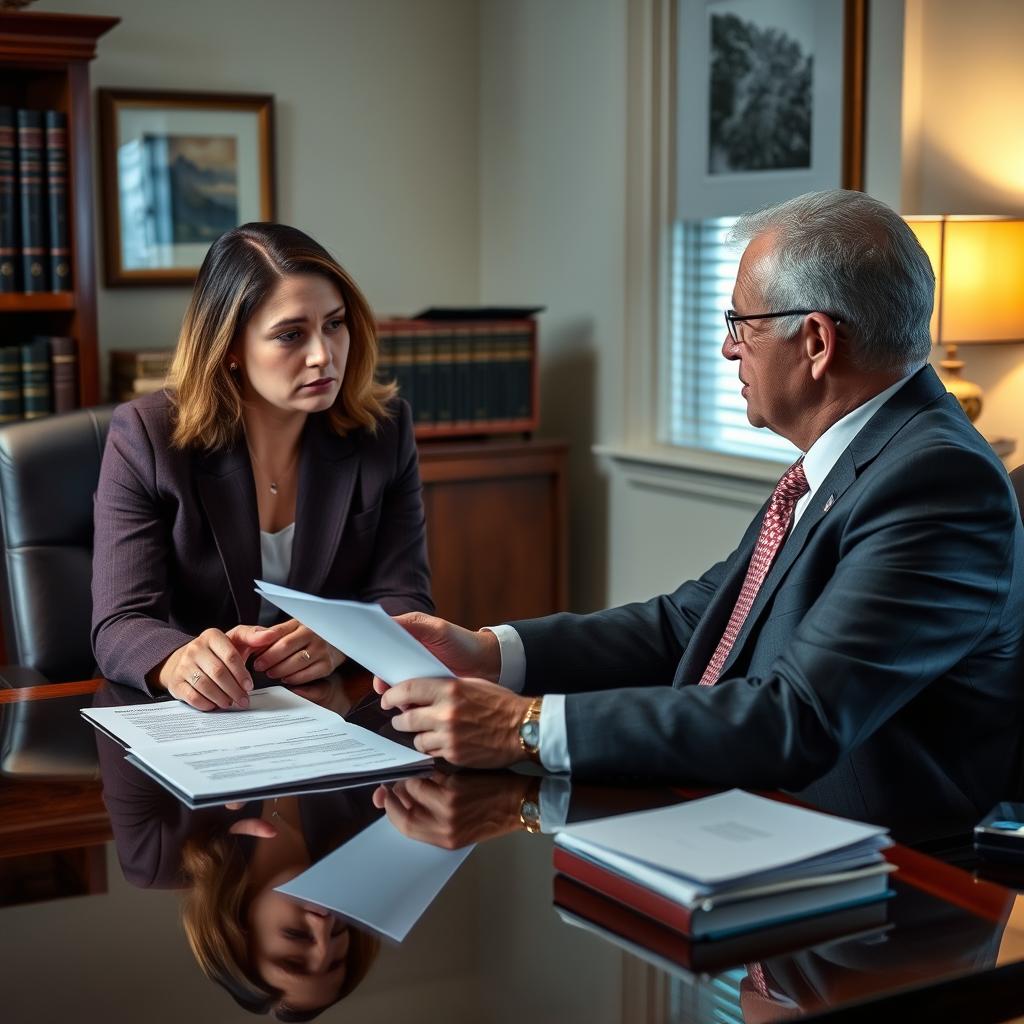
Contract Lawyer Albemarle County
You need a Contract Lawyer Albemarle County to enforce or defend a business agreement. Law Offices Of SRIS, P.C. —Advocacy Without Borders. Virginia contract law is based on common law and specific statutes. A breach can lead to significant financial damages. SRIS, P.C. has a Location in Virginia to handle Albemarle County contract disputes. (Confirmed by SRIS, P.C.)
Statutory Definition of Contract Law in Virginia
Virginia contract disputes are governed by common law principles and specific statutes like the Uniform Commercial Code. The Virginia Code does not provide a single penalty for breach of contract. The remedy is typically monetary damages calculated to put the injured party in the position they would have been in had the contract been performed. Courts may also order specific performance or rescission in certain cases. The goal is to compensate for the loss, not to punish.
Contract law in Virginia is primarily judge-made common law. This body of law has developed through centuries of court decisions. It establishes the requirements for a valid contract: offer, acceptance, and consideration. It also defines what constitutes a material breach. The Virginia Supreme Court has issued many rulings that shape how contracts are interpreted. These precedents are binding on lower courts like the Albemarle County Circuit Court. A Contract Lawyer Albemarle County must know this case law.
Statutory law also plays a key role. The Virginia Uniform Commercial Code (UCC) governs contracts for the sale of goods. It is found in Title 8.2 of the Virginia Code. The Virginia Consumer Protection Act addresses unfair or deceptive contract terms. The Virginia Statute of Frauds requires certain contracts to be in writing. This includes contracts for the sale of real estate. It also includes agreements that cannot be performed within one year. An oral contract may be unenforceable under this statute.
Damages for breach of contract are meant to be compensatory. The court calculates the “benefit of the bargain.” This is the value of what was promised. Consequential damages may also be awarded if they were foreseeable. Punitive damages are rarely awarded in pure contract cases. The court has discretion to award attorney’s fees only if the contract specifically provides for them. Otherwise, each party typically bears its own legal costs. This makes early case evaluation critical.
What is the Virginia Statute of Frauds?
The Virginia Statute of Frauds requires certain contracts to be in writing to be enforceable. This law is codified in Virginia Code § 11-2. It applies to contracts for the sale of real estate, including land in Albemarle County. It also covers agreements that cannot be performed within one year from the making. A promise to answer for the debt of another must also be written. If an agreement falls under this statute and is not written, a court will not enforce it.
How does the UCC apply to contracts in Albemarle County?
The Virginia Uniform Commercial Code (UCC) applies to contracts for the sale of goods. Goods are defined as movable property. This includes business inventory, equipment, and consumer products. The UCC provides default rules for contract formation, performance, and remedies. It allows for recovery of incidental and consequential damages. For mixed contracts involving both goods and services, a court will determine the predominant purpose. A breach of agreement lawyer Albemarle County uses the UCC for sales disputes.
What are the elements of a valid contract in Virginia?
A valid contract in Virginia requires an offer, acceptance, consideration, and mutual assent. The terms must be definite and certain. The parties must have the legal capacity to contract. The contract’s purpose must be legal. Consideration is something of value exchanged between the parties. It can be money, a promise, or a performance. Without these elements, an agreement may be void or voidable. This is a fundamental defense in contract litigation. Learn more about Virginia legal services.
The Insider Procedural Edge in Albemarle County
Contract cases in Albemarle County are filed in the Albemarle County Circuit Court located at 501 E. Jefferson Street, Charlottesville, VA 22902. This court handles all civil claims where the amount in controversy exceeds $25,000. The court follows the Rules of the Supreme Court of Virginia. Local rules and judges’ standing orders add specific requirements. Knowing these local procedures provides a strategic advantage. Filing in the wrong court or missing a local deadline can jeopardize your case.
The clerk’s Location for the Albemarle County Circuit Court is on the second floor. The civil filing fee for a Complaint in a contract case is currently $84. There are additional fees for serving the defendant by the sheriff. If you request a jury trial, you must pay a jury fee. The court has specific forms for civil cover sheets. All pleadings must comply with formatting rules. Electronic filing is available but not always mandatory. A local contract dispute resolution lawyer Albemarle County files documents correctly the first time.
The timeline for a contract lawsuit can vary greatly. The defendant has 21 days after service to file an Answer. Discovery—the exchange of information—can take six months to a year. Motions for summary judgment may be filed after discovery. A trial date may be set many months in advance. The court’s docket can influence speed. Some judges move cases faster than others. Settlement conferences are often ordered by the court. Most contract cases settle before reaching a jury verdict.
Local procedural facts matter. The Albemarle County Circuit Court has specific judges who hear civil cases. Each judge has preferences for motion hearings and scheduling. Some favor detailed written briefs. Others prefer concise oral arguments. The local bar knows these tendencies. The court also has specific rules for mediation referrals. Understanding these unwritten rules is key. It affects how you present your case. SRIS, P.C. attorneys review local procedures for every new matter.
Penalties & Defense Strategies for Contract Breach
The most common penalty for breach of contract is an award of monetary damages to the non-breaching party. Damages are not a penalty in the criminal sense. They are a legal remedy to make the injured party whole. The calculation is based on actual financial loss. This includes direct losses and sometimes consequential losses. The court aims to provide the “benefit of the bargain.” The goal is to place the plaintiff in the position they would have been in if the contract was performed.
| Offense / Claim | Typical Remedy / Penalty | Notes |
|---|---|---|
| Breach of Contract (General) | Compensatory Damages | Covers direct losses from the breach. Calculated as value of promised performance minus value of actual performance. |
| Breach of Sale of Goods (UCC) | Incidental & Consequential Damages | Incidental costs include handling rejected goods. Consequential damages cover lost profits if foreseeable. |
| Specific Performance | Court Order to Perform Contract | Rare. Granted only when monetary damages are inadequate (e.g., unique real estate). |
| Rescission | Contract is Canceled; Parties Restored | Remedy for fraud, mistake, or incapacity. Aim is to return parties to pre-contract position. |
| Attorney’s Fees | Fee Award to Prevailing Party | Only awarded if contract has a specific fee-shifting clause. Otherwise, each side pays its own. |
[Insider Insight] Albemarle County prosecutors do not handle civil contract disputes. The Commonwealth’s Attorney focuses on criminal law. Contract cases are civil matters between private parties. The local judiciary, however, has trends. Judges in the Albemarle Circuit Court expect precise legal arguments. They favor parties who attempt good-faith settlement before trial. They scrutinize damage calculations closely. Demonstrating that you mitigated your damages is crucial. A strong defense often challenges the plaintiff’s damage model as speculative. Learn more about criminal defense representation.
Defense strategies begin with the contract itself. The first step is a thorough analysis of the agreement’s terms. Many disputes hinge on ambiguous language. The defense may argue the contract is unenforceable due to the Statute of Frauds. Lack of consideration is another defense. The defendant may claim they performed their obligations. They might argue the plaintiff breached first. Asserting that damages were not foreseeable is common. Proving the plaintiff failed to mitigate their losses can reduce liability. These arguments require detailed evidence.
Pre-trial motions can end a case early. A Demurrer challenges the legal sufficiency of the Complaint. A Plea in Bar asserts a defense that blocks the claim entirely, like the statute of limitations. For contract claims, the statute of limitations is typically five years in Virginia. A Motion for Summary Judgment argues there is no genuine dispute of material fact. The court can rule as a matter of law. These motions require strong legal briefing. They are tools a skilled Contract Lawyer Albemarle County uses to control litigation costs.
What is the statute of limitations for a contract lawsuit in Virginia?
The statute of limitations for most written contracts in Virginia is five years. The clock starts ticking when the breach occurs. For oral contracts, the limit is three years. The discovery rule may delay the start in cases of fraud. If you miss this deadline, your claim is barred forever. A defendant will file a Plea in Bar based on the statute. This is a complete defense. You must act promptly to preserve your rights.
Can I recover attorney’s fees if I win my contract case?
You can only recover attorney’s fees if your contract has a specific clause allowing it. Virginia follows the “American Rule.” Each party pays its own legal fees win or lose. A fee-shifting clause must be clear and unambiguous. The court will enforce it. The clause may also apply to fees incurred in collecting a judgment. Without this clause, your legal costs are not part of your damages. This makes early case assessment vital.
What is the difference between compensatory and consequential damages?
Compensatory damages cover the direct loss from the breached contract. This is the difference between the contract price and the market price. Consequential damages are indirect losses that result from the breach. They include lost profits on other deals. To recover consequential damages, you must prove they were foreseeable at the time of contract formation. The defendant must have known these losses were a probable result of breach. These damages are often heavily contested.
Why Hire SRIS, P.C. for Your Albemarle County Contract Dispute
Our lead contract attorney for Virginia matters is a seasoned litigator with direct experience in Commonwealth courts. This attorney has handled numerous breach of contract cases through trial and appeal. They understand how Virginia judges interpret contract language. They know the procedural shortcuts and pitfalls in the Albemarle County Circuit Court. This practical knowledge translates into efficient and effective representation. We do not waste time or client money on theoretical arguments. Learn more about DUI defense services.
Attorney Profile: Our Virginia contract team includes attorneys with backgrounds in business and complex litigation. They have negotiated and litigated contracts across various industries. This includes real estate, construction, services, and sales. They are familiar with the Virginia UCC and common law principles. They have achieved favorable settlements and verdicts for clients. Their focus is on achieving your business objectives, whether through settlement or trial.
SRIS, P.C. has a documented record of results in Virginia civil courts. Our approach is direct and strategic. We first conduct a deep-dive analysis of your contract and the facts of the breach. We identify the core legal issues and your best arguments. We then develop a plan focused on your desired outcome. We communicate this plan clearly, without jargon. We prepare every case as if it will go to trial. This posture often leads to stronger settlement positions.
The firm differentiates itself with its “Advocacy Without Borders” model. We have a Location in Virginia staffed with attorneys licensed here. We are not a referral service. Our attorneys handle your case from start to finish. We provide consistent communication. You will know who is working on your matter. We use technology to keep clients informed. We understand that a contract dispute can disrupt your business. We aim for resolution that lets you move forward.
Hiring a contract dispute resolution lawyer Albemarle County is an investment. The cost of litigation can be high. An experienced firm can often resolve matters more efficiently. We provide realistic assessments of your case’s value and risk. We explain the litigation process upfront. We discuss potential costs and timelines. Our goal is to be your advocate, not just your lawyer. We fight to protect your interests under the contract and Virginia law.
Localized FAQs for Contract Issues in Albemarle County
Where do I file a breach of contract lawsuit in Albemarle County?
File a breach of contract lawsuit at the Albemarle County Circuit Court. The address is 501 E. Jefferson Street, Charlottesville, VA 22902. This court handles civil claims where the amount disputed exceeds $25,000. The clerk’s Location is on the second floor.
What court handles small business contract disputes in Albemarle?
The Albemarle County General District Court handles claims under $25,000. For disputes over $25,000, file in the Albemarle County Circuit Court. The choice of court affects procedure and potential remedies. A lawyer can advise on the best venue. Learn more about our experienced legal team.
How long does a contract lawsuit take in Albemarle County Circuit Court?
A contract lawsuit can take one to two years from filing to trial. Discovery and pre-trial motions cause most delays. Many cases settle during this process. The court’s trial schedule also impacts the timeline significantly.
Can a verbal agreement be enforced in Virginia?
Some verbal agreements are enforceable in Virginia. The Statute of Frauds requires certain contracts to be in writing. This includes real estate sales and contracts lasting over a year. Proving the terms of a verbal agreement is challenging.
What are the alternatives to litigation for contract disputes?
Alternatives include direct negotiation, mediation, and arbitration. Mediation is a structured settlement conference with a neutral third party. Arbitration is a private trial with a binding decision. These methods are often faster and less costly than court litigation.
Proximity, CTA & Disclaimer
Our Virginia Location is positioned to serve clients in Albemarle County and across the Commonwealth. For a Consultation by appointment regarding your contract dispute, call our team 24/7. We will review your agreement and the facts of your case. We will outline a clear path forward based on Virginia law and local court procedures.
Law Offices Of SRIS, P.C.—Advocacy Without Borders.
Consultation by appointment. Call 24/7.
Phone: [PHONE NUMBER FROM GMB – TO BE INSERTED]
Virginia Location Address: [VIRGINIA LOCATION ADDRESS FROM GMB – TO BE INSERTED]
Past results do not predict future outcomes.