
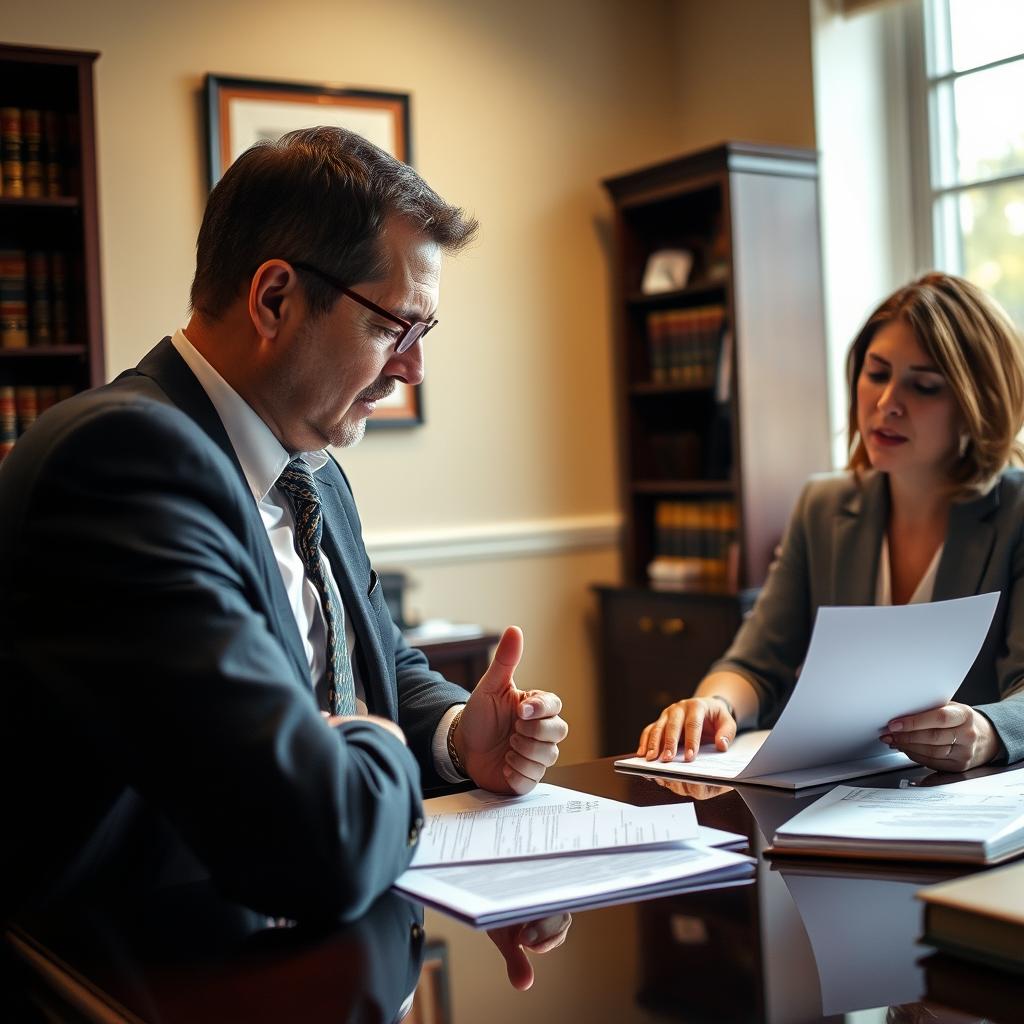
Felony Conviction Divorce Lawyer Albemarle County, VA
When a spouse is convicted of a serious criminal offense and receives a prison sentence of more than one year, Virginia law permits the other spouse to seek an immediate divorce on that fault-based ground. In Albemarle County, these cases are filed in the Albemarle County Circuit Court, located at 350 Park Street, Charlottesville, VA 22902. Mr. Sris and his Of Counsel at Law Offices Of SRIS, P.C. represent individuals who need to dissolve a marriage based on a spouse’s felony conviction. The firm serves clients throughout Albemarle County from its Shenandoah location at 505 N Main St, Suite 103, Woodstock, VA 22664. To request a consultation about a divorce involving a felony conviction, call (888) 437-7747. Law Offices Of SRIS, P.C. — Advocacy Without Borders.
Understanding Divorce Based on Felony Conviction in Albemarle County
In Virginia, a spouse may obtain a divorce on the ground that the other spouse has been sentenced to confinement for more than one year for a felony, under Va. Code § 20-91.
Source: Va. Code § 20-91. Virginia Legislative Information System
Reviewed by Mr. Sris, admitted in VA/MD/DC/NJ/NY.
Virginia Code § 20-91 identifies felony conviction and associated incarceration as one of the fault grounds for divorce from the bond of matrimony. Unlike no-fault separation periods, this ground does not require a waiting period once the conviction and sentence are final. The spouse who has been convicted need not have been incarcerated in Virginia; the critical element is a felony conviction resulting in a sentence exceeding one year of confinement. Albemarle County Circuit Court has exclusive jurisdiction over divorce proceedings, while separate matters such as child custody or support may also be addressed in the Albemarle County Juvenile and Domestic Relations District Court. Because fault may influence equitable distribution and spousal support determinations, a spouse considering this ground should understand how the conviction interacts with the comprehensive factors a Virginia court evaluates.
The procedural steps in an Albemarle County divorce based on felony conviction follow the standard divorce process, but the party seeking the divorce must present admissible evidence of the conviction and sentence. This may include certified court records from the criminal proceeding. Virginia also requires that at least one party be a resident and domiciliary of the Commonwealth for six months before filing. Once the complaint for divorce is filed in the Circuit Court, the court addresses property division, spousal support, and, if applicable, child-related matters. Although a fault ground can shorten the path to a final decree, the overall timeline varies depending on court scheduling and any contested issues.
How Mr. Sris and His Of Counsel Handle Divorce Cases Involving Felony Conviction
Mr. Sris, Owner and Founder of Law Offices Of SRIS, P.C., is a former prosecutor who uses his understanding of criminal case construction to efficiently gather and present the conviction evidence required in a fault-based divorce. His Of Counsel team brings extensive civil litigation experience to the remaining divorce components—equitable distribution of marital property, classification of separate versus hybrid assets, and determination of spousal support. Rather than treating the felony conviction as a stand-alone fact, the firm’s approach integrates the conviction’s impact into the overall divorce strategy, analyzing how fault may affect the court’s distribution of assets and any award of support.
Because Virginia is an equitable distribution state, the court weighs multiple statutory factors, including the circumstances that contributed to the dissolution of the marriage. A felony conviction that caused financial harm or emotional distress can be relevant to that analysis. Mr. Sris and his Of Counsel work to present a clear record of the conviction and its consequences while also negotiating or litigating the full range of divorce issues, from parenting arrangements to retirement-account division. The team’s collective experience includes complex property identification and valuation, which is often necessary when a spouse’s incarceration has disrupted the couple’s financial affairs.
About Mr. Sris and His Of Counsel Team
Mr. Sris, Owner and Founder, has practiced law since 1997 and is admitted in Virginia, Maryland, the District of Columbia, New Jersey, and New York. As a former prosecutor, he understands how criminal cases are built and how conviction records can be authenticated for use in civil proceedings. He testified before the Virginia House Courts of Justice Committee in support of 2019 HB 635 (chief patron Del. David Bulova). His background informs the firm’s handling of divorce cases where fault grounds intersect with prior criminal matters. Mr. Sris and his Of Counsel bring over 120 years of combined legal experience and have achieved 4,739+ documented firm-wide results. Results may vary.
Frequently Asked Questions
What is a felony conviction divorce in Virginia?
A felony conviction divorce is a fault-based divorce granted when one spouse has been convicted of a felony and sentenced to confinement for more than one year. Under Va. Code § 20-91, this ground permits the other spouse to file for divorce without a waiting period. The divorce addresses all standard issues—property division, support, and custody—while the conviction itself serves as the legal basis for dissolving the marriage.
Do I need to prove the conviction myself?
The party seeking the divorce must present evidence of the felony conviction and the sentence. Mr. Sris and his Of Counsel assist clients by obtaining certified copies of the criminal judgment and sentencing order, which the Albemarle County Circuit Court will accept as proof. The firm handles authentication so that the record is properly before the divorce court.
Can a felony conviction affect property division?
Yes. Virginia courts consider the factors that contributed to the dissolution of the marriage when dividing marital property. A felony conviction—especially one that caused financial loss or other hardship—can influence the equitable distribution award. The firm evaluates how the conviction intersects with the statutory factors to advocate for a fair division.
How long does a divorce based on felony conviction take in Albemarle County?
The timeline varies by case. Because no mandatory separation period is required on this fault ground, the divorce may proceed more quickly than a no-fault divorce, but the overall duration depends on the court’s calendar and whether any issues are contested. An uncontested divorce with a signed separation agreement can be resolved after the statutory waiting periods expire; a contested matter will take longer.
What if the convicted spouse is incarcerated in another state?
The divorce can still be filed in Albemarle County as long as Virginia’s residency requirements are met and the felony conviction meets the statute’s sentencing threshold. Service of process on an incarcerated spouse may require additional steps, but the firm handles service in accordance with Virginia procedural rules. The conviction records from another jurisdiction remain admissible when properly authenticated.
How can I consult a lawyer about a felony conviction divorce in Albemarle County?
To discuss your situation, contact Mr. Sris and his Of Counsel at (888) 437-7747. The firm offers consultations by appointment and can review the circumstances of the conviction and its impact on your divorce. Representation is available regardless of whether you live in Albemarle County or have a spouse incarcerated elsewhere.
Albemarle County Family Law Resources
• Fairfax County Family Law Lawyer
• Fairfax City Family Law Lawyer
• Falls Church Family Law Lawyer
• Prince William County Family Law Lawyer
• Manassas Family Law Lawyer
Virginia Primary Sources
Va. Code § 20-91 · Albemarle County Circuit Court · Virginia Courts
Attorney advertising. Prior results do not guarantee a similar outcome. Case results depend on a variety of factors unique to each case. Results may vary.
If you want to see how an Albemarle County case fits into the wider process, our page on felony conviction divorce lawyer Virginia covers it from start to finish.