
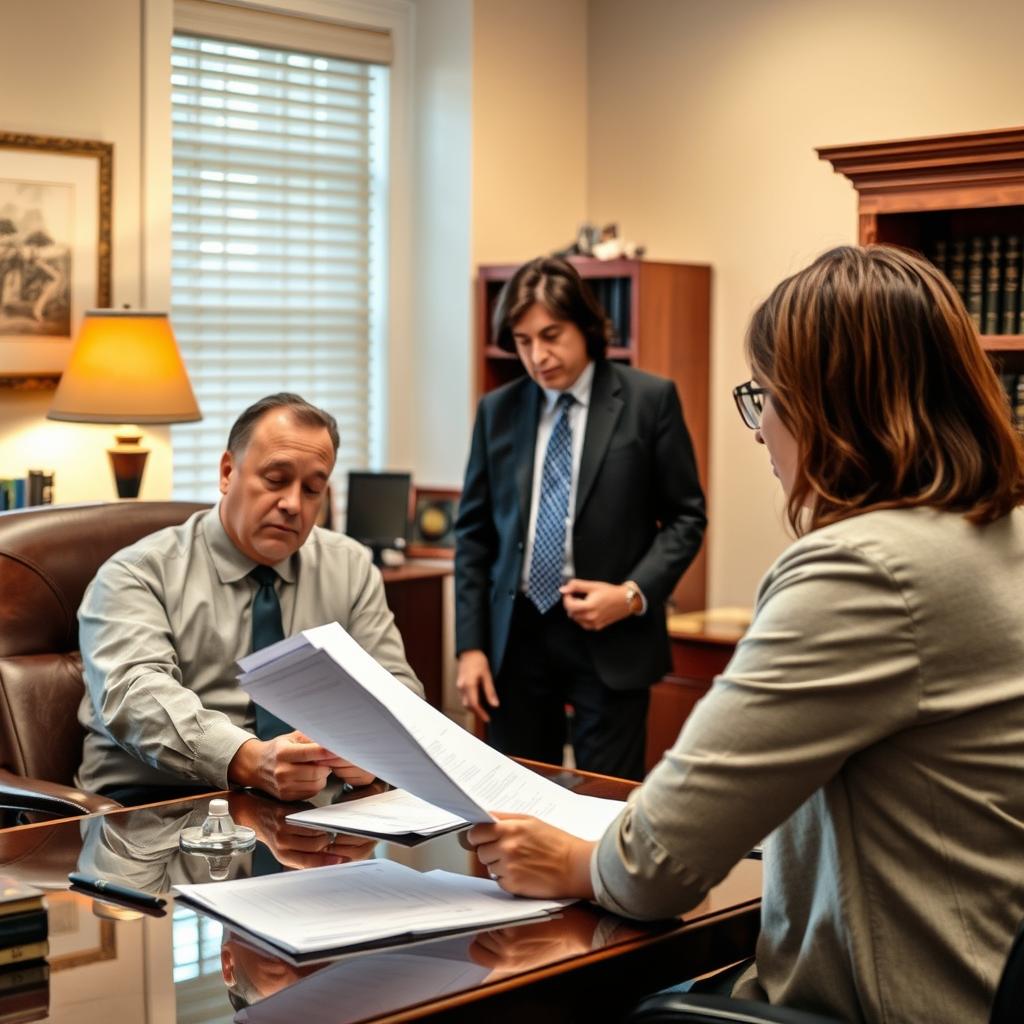
Witness Tampering lawyer Albemarle County, VA
Facing a federal witness tampering investigation or indictment in Albemarle County calls for immediate, focused legal representation. Federal prosecutors from the United States Attorney’s Office for the Western District of Virginia treat allegations of witness interference, obstruction of justice, or retaliation against a witness with dedicated seriousness. A conviction under 18 U.S.C. § 1503 or § 1512 can bring imprisonment of up to 20 years—and more when additional aggravating conduct is charged—plus substantial fines and supervised release. Because these cases are built on witness statements, electronic evidence, and witness-credibility assessments, early defense engagement can materially affect the direction of the government’s case. Mr. Sris and his Of Counsel team at Law Offices Of SRIS, P.C. represent individuals under federal scrutiny for witness tampering matters in Albemarle County. Your first step is to request a consultation: call (888) 437-7747, available 24 hours a day. By appointment only. Law Offices Of SRIS, P.C. – Advocacy Without Borders.
Federal witness tampering charges in Albemarle County, Virginia – an overview
Federal witness tampering prosecutions in Albemarle County are brought in the U.S. District Court for the Western District of Virginia, Charlottesville Division, located at 255 W Main Street, Charlottesville, Virginia 22902. These cases are initiated by a grand jury indictment and are typically investigated by agencies such as the Federal Bureau of Investigation, the Drug Enforcement Administration, or the Bureau of Alcohol, Tobacco, Firearms and Explosives. The government must prove beyond a reasonable doubt that the defendant knowingly used intimidation, threats, corrupt persuasion, or misleading conduct to influence, delay, or prevent the testimony of a witness in an official proceeding—or to retaliate against a witness for having provided testimony. The operative statutes, principally 18 U.S.C. § 1503 (obstruction of justice) and 18 U.S.C. § 1512 (tampering with a witness, victim, or informant), carry maximum prison terms of 20 years for obstruction-related offenses, and additional enhancements if the conduct results in physical injury or involves killing.
Federal sentencing under the U.S. Sentencing Guidelines is advisory post-Booker, yet the guidelines exert powerful influence. The offense level is driven by specific offense characteristics: whether the offense involved physical force, whether the defendant exercised substantial interference, and whether the target was a witness in a criminal prosecution. Mandatory minimum statutes do not generally apply to obstruction alone, but related violence or firearm counts can stack decades of mandatory time. The federal system has no parole, and good-time credit is limited. Early retention of counsel allows for thorough evaluation of the government’s evidence, exploration of legal defenses such as lack of corrupt intent or insufficient nexus to an official proceeding, and, when appropriate, negotiation with the U.S. Attorney’s Office before indictment. Mr. Sris and his Of Counsel appear regularly before the federal judges and magistrate judges of the Western District of Virginia and understand the local procedural practices that govern initial appearances, detention hearings, and discovery scheduling.
How Mr. Sris and his Of Counsel handle federal witness tampering defense
Defending a federal witness tampering charge requires a layered strategy that begins with an exacting review of the government’s investigative file. The prosecution frequently relies on recorded conversations, electronic communications, and cooperating-witness testimony. Mr. Sris and his Of Counsel examine the chain of custody for any digital evidence, evaluate the credibility and motives of cooperating witnesses, and assess whether law enforcement’s investigative techniques complied with applicable constitutional and statutory standards. The defense also examines whether the alleged conduct actually involved a “witness” in an “official proceeding”—both terms of art under the statutes—or whether the communication was protected speech that fell short of corrupt persuasion.
Pretrial motion practice is a critical front. Challenges to the sufficiency of the indictment, motions to suppress evidence obtained in violation of the Fourth Amendment or federal wiretap law, and requests for a Franks hearing to test the veracity of an agent’s affidavit can narrow the prosecution’s case. Because the U.S. Attorney’s Office for the Western District of Virginia often pursues obstruction charges alongside underlying substantive offenses—such as racketeering, narcotics conspiracy, or fraud—the defense team works to separate the obstruction allegations from the charged predicates, exposing evidentiary gaps that can improve the client’s bargaining position. Throughout the process, Mr. Sris and his Of Counsel maintain open communication with the assigned Assistant U.S. Attorney, seeking resolutions that protect the client’s long-term interests when the evidence warrants. When the case proceeds to trial, the team brings extensive courtroom experience to jury selection, cross-examination of government witnesses, and presentation of defense evidence.
About Mr. Sris and his Of Counsel team
Mr. Sris, Owner and Founder of Law Offices Of SRIS, P.C., has practiced criminal defense since 1997. A former prosecutor, he brings insight into how the government assembles federal cases and what weaknesses defense counsel can exploit. He is admitted to practice in Virginia, Maryland, the District of Columbia, New Jersey, and New York. On federal criminal matters in Albemarle County, Mr. Sris works alongside his Of Counsel team, including attorneys with extensive federal courtroom experience. Mr. Sris and his Of Counsel bring over 120 years of combined legal experience and have achieved 4,739+ documented firm-wide results. Results may vary.
Frequently Asked Questions
What is the difference between state and federal charges?
Federal charges are prosecuted by the U.S. Attorney with generally harsher penalties and no parole. An experienced federal defense attorney is critical.
What is federal criminal court and how is it different in VA?
Federal criminal cases in VA are prosecuted by U.S. Attorneys in U.S. District Court and carry harsher sentencing guidelines than state charges. Law Offices Of SRIS, P.C. handles federal defense – (888) 437-7747.
How do federal sentencing guidelines work in Albemarle County, Virginia?
Federal sentencing at U.S. District Court for the Western District of Virginia follows the U.S. Sentencing Guidelines—a points-based calculation using offense level and criminal history category. While advisory since Booker (2005), guidelines strongly influence sentencing. Mandatory minimum statutes override downward departures in many drug, firearm, and child exploitation offenses. Acceptance of responsibility, substantial assistance (§ 5K1.1), and safety-valve eligibility materially reduce exposure. Law Offices Of SRIS, P.C. – (888) 437-7747.
Do I need a federal criminal defense lawyer in Albemarle County, Virginia?
Yes, immediately. Federal cases at U.S. District Court for the Western District of Virginia are prosecuted by the U.S. Attorney’s Office with federal investigative resources (FBI, DEA, IRS-CI, ATF) and carry federal sentencing guidelines that often include mandatory minimums. State-court experience does not translate—federal practice has distinct rules, pretrial detention standards, and sentencing procedures. Early engagement before indictment materially affects outcomes. Law Offices Of SRIS, P.C. – (888) 437-7747, by appointment only.
What are the potential penalties for witness tampering in federal court?
Witness tampering charges under 18 U.S.C. § 1503 or § 1512 carry maximum prison sentences of up to 20 years, with longer terms if a killing results. The specific sentence depends on the offense conduct, the defendant’s criminal history, and the application of the U.S. Sentencing Guidelines. Federal sentences are served without parole, and good-time credit is limited. An experienced defense attorney can explain how the guidelines apply to a particular set of facts.
How long does a federal criminal case take in Virginia?
The length of a federal criminal case varies widely depending on the complexity of the investigation, the number of defendants, the volume of discovery, and the court’s docket. The Speedy Trial Act imposes deadlines—indictment within 30 days of arrest and trial within 70 days of indictment, subject to excludable delays. A case may resolve through a plea agreement in several months, or proceed to trial over a year or more. Your attorney can provide a more specific estimate once the procedural posture is known.
Additionally, you may find these related pages helpful:
- Federal Criminal Lawyer Fairfax County, VA
- Federal Criminal Lawyer Falls Church, VA
- Federal Criminal Lawyer Prince William County, VA
Primary source references:
Attorney advertising. Prior results do not guarantee a similar outcome.
Results may vary.
Case results depend on a variety of factors unique to each case.