
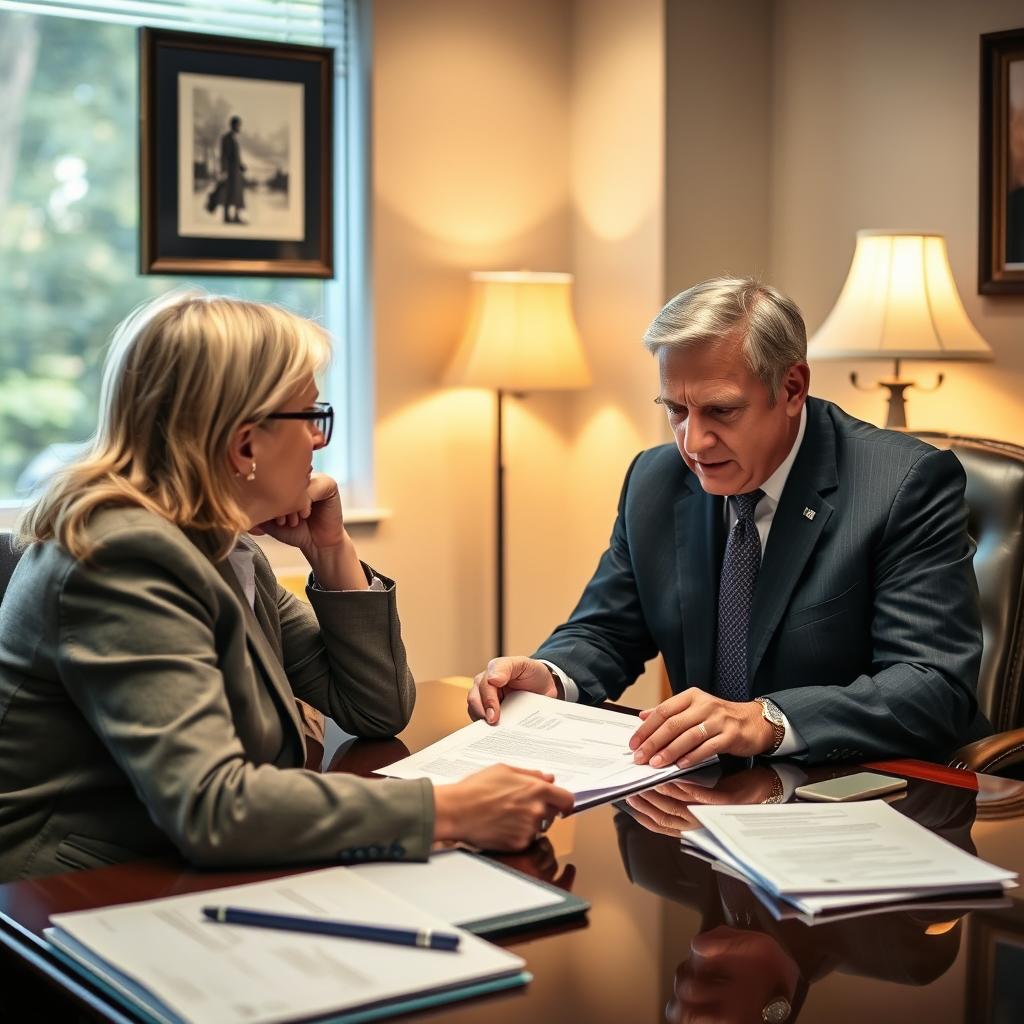
Foundation Planning Lawyer Madison County, VA
Foundation planning allows individuals and families in Madison County to create lasting charitable legacies while preserving family assets and minimizing tax exposure. Whether you are establishing a private foundation, a charitable trust, or a donor‑advised fund, proper legal structuring is essential. The Madison County Circuit Court, the court of competent jurisdiction for probate and trust matters at 1 Main Street, Madison, Virginia, oversees trust administration and any disputes that may arise. Law Offices Of SRIS, P.C. assists clients throughout Madison County—including Madison, Brightwood, Etlan, Pratts, and Wolftown—with foundation planning that aligns with their philanthropic goals and financial circumstances. Mr. Sris and his Of Counsel team work with you to evaluate entity choices, draft governing documents, and secure favorable federal tax treatment. Reach our firm at (888) 437‑7747 to request a consultation. Law Offices Of SRIS, P.C. – Advocacy Without Borders.
What Foundation Planning Means in Madison County, Virginia
Foundation planning in Virginia generally involves the creation of a charitable vehicle—most often a nonprofit corporation or a charitable trust—that operates under the Virginia Uniform Trust Code (Title 64.2 of the Virginia Code) and the Virginia Nonstock Corporation Act. In Madison County, the Circuit Court exercises jurisdiction over probate and trust administration, and its clerk administers the probate process. A well‑structured foundation can support educational, religious, scientific, or other public‑benefit purposes while providing significant estate‑tax and income‑tax advantages. Because Virginia does not impose a state estate tax, the primary tax considerations are federal; the applicable federal estate‑tax exemption is substantial, and gifts to qualified charitable entities are deductible for federal gift‑ and estate‑tax purposes.
Local advisors often recommend that foundation founders address several key items early: whether the foundation will be funded during the founder’s lifetime or at death, how the board of directors or trustees will be selected, and what the foundation’s specific charitable mission will be. The governing documents must satisfy Virginia statutory formalities to be enforceable, and if the foundation is structured as a private foundation, additional Internal Revenue Code rules apply, including minimum distribution requirements and restrictions on self‑dealing. Mr. Sris and his Of Counsel are familiar with the procedural requirements of the Madison County Circuit Court and guide clients through each step while remaining mindful of both Virginia trust law and federal tax law.
How Mr. Sris and His Of Counsel Handle Foundation Planning Cases
Every foundation planning engagement begins with a detailed discussion of the client’s charitable intentions, family circumstances, and financial situation. Mr. Sris and his Of Counsel analyze which entity form best serves the client’s goals—often a charitable remainder trust, a charitable lead trust, or a private foundation structured as a nonprofit corporation. They then prepare and review the foundational documents, such as the declaration of trust or articles of incorporation, ensuring compliance with Virginia law and optimal federal tax treatment. Where necessary, they handle court filings with the Madison County Circuit Court and coordinate with independent professionals—such as certified public accountants and appraisers—to value contributed assets and prepare required tax returns.
Throughout the process, the team emphasizes transparency and communication. Clients are advised of their fiduciary obligations as trustees or directors, and the firm helps implement governance policies that reduce the risk of audit or challenge. For existing foundations that face operational or compliance issues, Mr. Sris and his Of Counsel can represent trustees and directors in trust modification proceedings and in any disputes that come before the Madison County Circuit Court. By combining careful drafting with proactive governance advice, the firm works to achieve stable, tax‑advantaged charitable structures that serve their intended purposes for years to come.
About Mr. Sris and His Of Counsel Team
Mr. Sris, Owner and Founder of Law Offices Of SRIS, P.C., launched the firm in 1997 after service as a prosecutor. His foundation‑planning practice draws on over two decades of experience representing individuals and families across Virginia. Mr. Sris testified before the Virginia House Courts of Justice Committee in support of 2019 HB 635 (chief patron Del. David Bulova). He is admitted to practice in Virginia, Maryland, the District of Columbia, New Jersey, and New York, and is supported by a multi‑state Of Counsel team.
Mr. Sris and his Of Counsel bring extensive combined legal experience. Results may vary. They work collectively on trust and estate matters, ensuring that each client benefits from the firm’s institutional knowledge of Virginia trust law, the probate procedures of the Madison County Circuit Court, and the federal tax rules governing charitable entities. The firm communicates in English, Spanish, and Tamil and serves the Madison County communities of Madison, Brightwood, Etlan, Pratts, and Wolftown.
Frequently Asked Questions
What is foundation planning, and how does it work in Virginia?
Foundation planning is the process of creating a charitable legal entity—such as a private foundation or charitable trust—that holds and distributes assets for a nonprofit purpose. In Virginia, a foundation may be structured as a trust governed by the Virginia Uniform Trust Code or as a nonprofit corporation under the Virginia Nonstock Corporation Act. The chosen structure dictates the governing documents, the fiduciary duties of the trustees or directors, and the method for modifying the foundation over time. Federal tax exemption is obtained by filing an application with the IRS. A properly planned foundation can deliver immediate income‑tax benefits, reduce the taxable estate at death, and create a lasting family legacy. For guidance on your specific situation, reach Law Offices Of SRIS, P.C. at (888) 437‑7747.
How is a charitable foundation structured under Virginia law?
A charitable foundation in Virginia is most commonly formed as either a charitable trust or a nonprofit corporation. A charitable trust is established by executing a declaration of trust that names a trustee, identifies the charitable beneficiaries, and outlines the terms of administration. A nonprofit corporation is formed by filing articles of incorporation with the Virginia State Corporation Commission; it must then adopt bylaws and appoint a board of directors. Both structures are eligible to apply for federal tax‑exempt status under Internal Revenue Code § 501(c)(3). The choice between a trust and a corporation depends on factors such as the desired governance structure, the nature of the assets being transferred, and the planned duration of the foundation. A lawyer can help assess which vehicle aligns best with your philanthropic goals.
What tax benefits are available for foundations in Virginia?
Virginia imposes no state estate tax, so foundation‑planning tax benefits are largely federal. An outright bequest to a qualified charity is fully deductible for federal estate‑tax purposes. Lifetime contributions to a public charity or private foundation can generate an income‑tax deduction, subject to adjusted‑gross‑income percentage limits. Moreover, assets placed in a charitable remainder trust can provide an income stream to the donor while removing the assets from the donor’s taxable estate. For families with substantial wealth, a foundation can shift tax liability away from the estate and toward charitable purposes, potentially preserving more wealth for non‑charitable heirs. Every tax situation is unique, and a tax professional should be consulted to confirm the specific benefits available.
Do I need a lawyer to establish a foundation in Madison County?
While Virginia law does not require attorney involvement to create a foundation, the complexity of the governing instruments and the need to comply with both state law and the Internal Revenue Code make legal counsel advisable. Mistakes in drafting can jeopardize the foundation’s tax‑exempt status, expose trustees to personal liability, or result in costly litigation in the Madison County Circuit Court. An experienced attorney can help select the appropriate entity form, draft the declaration of trust or articles of incorporation, coordinate with accountants on tax‑exemption applications, and advise on ongoing compliance obligations. To discuss your foundation plans, contact Law Offices Of SRIS, P.C. at (888) 437‑7747.
How do I get started with foundation planning in Madison County?
The first step is to clarify your charitable mission and determine the assets you wish to contribute. Next, review the available structures—typically a charitable trust or a private foundation—with legal counsel who understands both Virginia trust law and the federal tax framework. Your attorney will then prepare the foundational documents and, if applicable, assist with registering the entity with the Virginia State Corporation Commission and filing for IRS recognition of tax‑exempt status. Because the Madison County Circuit Court may become involved if the foundation is a trust or if disputes arise, having an attorney who is familiar with local court procedures can streamline the process. For a consultation, reach Mr. Sris and his Of Counsel at (888) 437‑7747.
Virginia Primary Sources: Virginia Code Title 64.2 (Wills, Trusts & Estates) | SCC Business Entity Filings | Madison County Circuit Court
Attorney advertising. Prior results do not guarantee a similar outcome. Case results depend on a variety of factors unique to each case. Results may vary.