
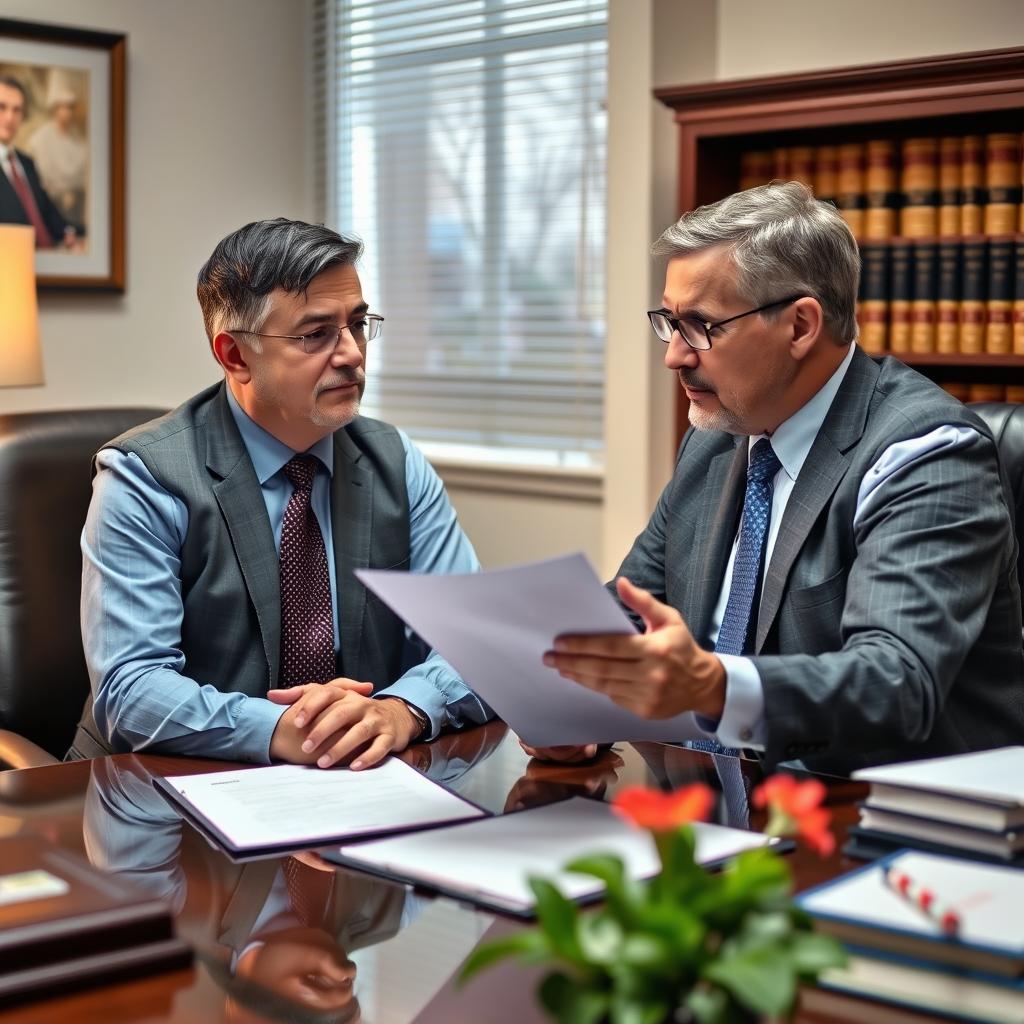
Breath Test Refusal Lawyer Charlottesville, VA
When a driver is arrested for driving under the influence in Charlottesville, the officer typically asks for a breath or blood test under Virginia’s implied‑consent law. A refusal to submit to the test does not close the matter — it triggers its own separate legal proceeding. Law Offices Of SRIS, P.C. represents individuals facing breath test refusal allegations in Charlottesville City General District Court and across central Virginia. Our attorneys understand the interplay between the administrative license‑consequence hearing and the underlying criminal charge, and they work to protect the client’s driving privileges and record. To discuss a breath test refusal matter, reach our location at (888) 437‑7747. Law Offices Of SRIS, P.C. — Advocacy Without Borders.
What Traffic Law Means in Charlottesville, Virginia
Charlottesville is an independent city located in central Virginia, and its General District Court at 606 East Market Street handles traffic matters — including breath test refusal proceedings — for the city and surrounding communities. Under Va. Code § 18.2‑268.3, any person who operates a motor vehicle on Virginia highways has impliedly consented to submit to a chemical test following a lawful arrest for driving under the influence. A refusal can result in an administrative license suspension imposed by the Virginia Department of Motor Vehicles, separate from any criminal penalties for the underlying DUI charge. The procedure at the Charlottesville court follows the statewide framework: the Commonwealth must prove that the arrest was lawful, that the officer advised the individual of the implied‑consent obligation, and that the individual unreasonably refused to take the test. Our attorneys appear regularly at the Charlottesville court and understand how these cases are docketed and argued in this jurisdiction.
Because a breath test refusal case often proceeds alongside a DUI charge, early evaluation of the traffic stop, the officer’s instructions, and the individual’s physical and medical condition can be critical. The Charlottesville court may consider whether the individual had a valid reason — such as a physical inability to provide a sample or a failure by law enforcement to properly administer the refusal warning — that could affect the outcome. Law Offices Of SRIS, P.C. Examines the circumstances of each stop to determine whether the refusal finding can be challenged. Our familiarity with the courtroom procedures at 606 East Market Street allows us to present factual defenses in a manner that aligns with how the judges and prosecutors in Charlottesville assess breath‑test‑refusal cases.
How Mr. Sris and His Of Counsel Handle Traffic Law Cases
When Law Offices Of SRIS, P.C. represents someone facing a breath test refusal in Charlottesville, the first step is a thorough review of the law‑enforcement encounter. The attorneys examine the reason for the initial stop, the administration of field sobriety tests, the reading of the implied‑consent warning, and any medical or language barriers that may have affected the individual’s ability to consent. Because our team includes a former prosecutor and a former Virginia State Trooper, the firm brings insight into how the Commonwealth’s case is constructed and how law‑enforcement procedures are supposed to work. That perspective informs the decisions about which motions to file and what evidence to gather — such as audio‑video recordings, calibration records, and witness testimony.
Should the case proceed to a hearing at the Charlottesville City General District Court, the attorneys present evidence that the refusal was not unreasonable under the circumstances. If the court determines that the refusal was not properly proven, the license suspension can be avoided and the underlying DUI charge may be weakened. In many instances, the firm can also negotiate with the Commonwealth’s Attorney to address both the refusal and the associated criminal charge together, aiming for a resolution that minimizes the long‑term impact on the client’s driving record and insurance. Throughout the process, clients receive clear explanations of their options and are kept informed of developments as the case moves through the court calendar.
About Mr. Sris and His Of Counsel Team
Mr. Sris, Owner and Founder of Law Offices Of SRIS, P.C., has practiced since 1997 and is admitted in Virginia, Maryland, the District of Columbia, New Jersey, and New York. A former prosecutor, Mr. Sris draws on that experience when handling traffic‑related matters such as breath test refusal allegations. He testified before the Virginia House Courts of Justice Committee in support of 2019 HB 635 (chief patron Del. David Bulova). Mr. Sris and his Of Counsel bring over 120 years of combined legal experience, and they have documented 4,739+ case results across all practice areas since 1997. Results may vary.
The Of Counsel team includes attorneys who are former Maryland Assistant State’s Attorney and former Virginia State Trooper — backgrounds that provide practical knowledge of how traffic‑stop investigations are conducted and how prosecutors evaluate refusal evidence. The firm’s Shenandoah Location at 505 N Main St, Suite 103, Woodstock, VA 22664 serves clients in Charlottesville and throughout central Virginia. Appointments are available by calling (888) 437‑7747. Our team speaks English, Spanish, and Tamil, and we offer consultations in the client’s preferred language whenever possible.
Frequently Asked Questions
What is a breath test refusal in Virginia?
Under Virginia’s implied‑consent law, a driver arrested for DUI is deemed to have agreed to submit to a breath or blood test upon request by law enforcement. A refusal to take the test after being informed of the consequences triggers a separate administrative proceeding that can result in license suspension for one year for a first offense, regardless of guilt on the underlying DUI charge. The refusal is also admissible as evidence in a later criminal trial. Because the refusal proceeding is independent, it requires distinct defenses that often involve challenging the validity of the stop, the completeness of the implied‑consent warning, or the existence of a medical reason for the refusal.
Do I need a lawyer for a breath test refusal in Charlottesville?
While you have the right to represent yourself, a breath test refusal charge involves technical legal issues — including the admissibility of the officer’s testimony about the refusal, the documentation of the implied‑consent warning, and the possibility of license sanctions — that can be difficult to manage without legal guidance. An attorney can review the evidence, identify procedural errors, and argue that the refusal was not unreasonable. Because the refusal hearing is typically held at the Charlottesville City General District Court soon after the arrest, securing representation early helps ensure that deadlines are met and that you understand the options before your court date. To discuss your situation, reach Law Offices Of SRIS, P.C. at (888) 437‑7747.
How does a Virginia lawyer defend against breath test refusal charges?
Defense strategies for breath test refusal in Virginia frequently examine whether the arresting officer had probable cause to make the DUI stop, whether the officer read the implied‑consent warning correctly and in a timely way, and whether the individual was physically unable to provide a sample due to a medical condition. An experienced attorney evaluates the specific facts under Va. Code § 18.2‑268.3 to build the strong $1. The attorney may also negotiate with the Commonwealth’s Attorney to resolve the refusal and any related DUI charge together, potentially reducing the overall impact on the client’s driving record and insurance. Every case turns on its own facts, and no particular outcome is promised.
What are the penalties for breath test refusal in Charlottesville, Virginia?
A first offense unreasonable refusal results in a one‑year administrative license suspension through the Virginia DMV, which runs independently of any criminal penalties from the DUI charge. If the individual has a prior DUI or refusal offense within the applicable timeframe, the suspension period can be longer and the refusal may be charged as a criminal offense. The Charlottesville City General District Court hears refusal cases under Va. Code § 18.2‑268.3, and the court may also consider the refusal when addressing any companion DUI matter. Because the precise consequences vary with the driver’s record, consulting with counsel about your specific circumstances is important.
Where can I find a breath test refusal lawyer near Charlottesville?
Law Offices Of SRIS, P.C. represents clients in Charlottesville City General District Court and throughout central Virginia. Our Shenandoah Location at 505 N Main St, Suite 103, Woodstock, VA 22664 is available by appointment, and our attorneys appear at the Charlottesville courthouse at 606 East Market Street. To schedule a consultation, call (888) 437‑7747. The firm’s experienced team can evaluate your refusal case, advise on the licensing consequences, and represent you at all stages of the proceeding.
How long does a breath test refusal case take in Virginia?
The timeline for a breath test refusal proceeding depends on the court’s docket and the complexity of the issues. In many instances, the refusal hearing is scheduled within a few weeks of the arrest; however, motions, witness availability, and coordination with a related DUI case can extend the process. An attorney can help you understand the likely schedule based on the current practices at the Charlottesville General District Court. Contact Law Offices Of SRIS, P.C. at (888) 437‑7747 for case‑specific guidance.
Related legal matters: Fairfax County traffic lawyer · Falls Church traffic lawyer · Prince William County traffic lawyer · Manassas traffic lawyer
For additional primary‑source information, see Virginia Code § 18.2‑268.3 (Implied consent) and Virginia’s Judicial System.
Attorney advertising. Prior results do not guarantee a similar outcome. Results may vary.
Case results depend on a variety of factors unique to each case.