
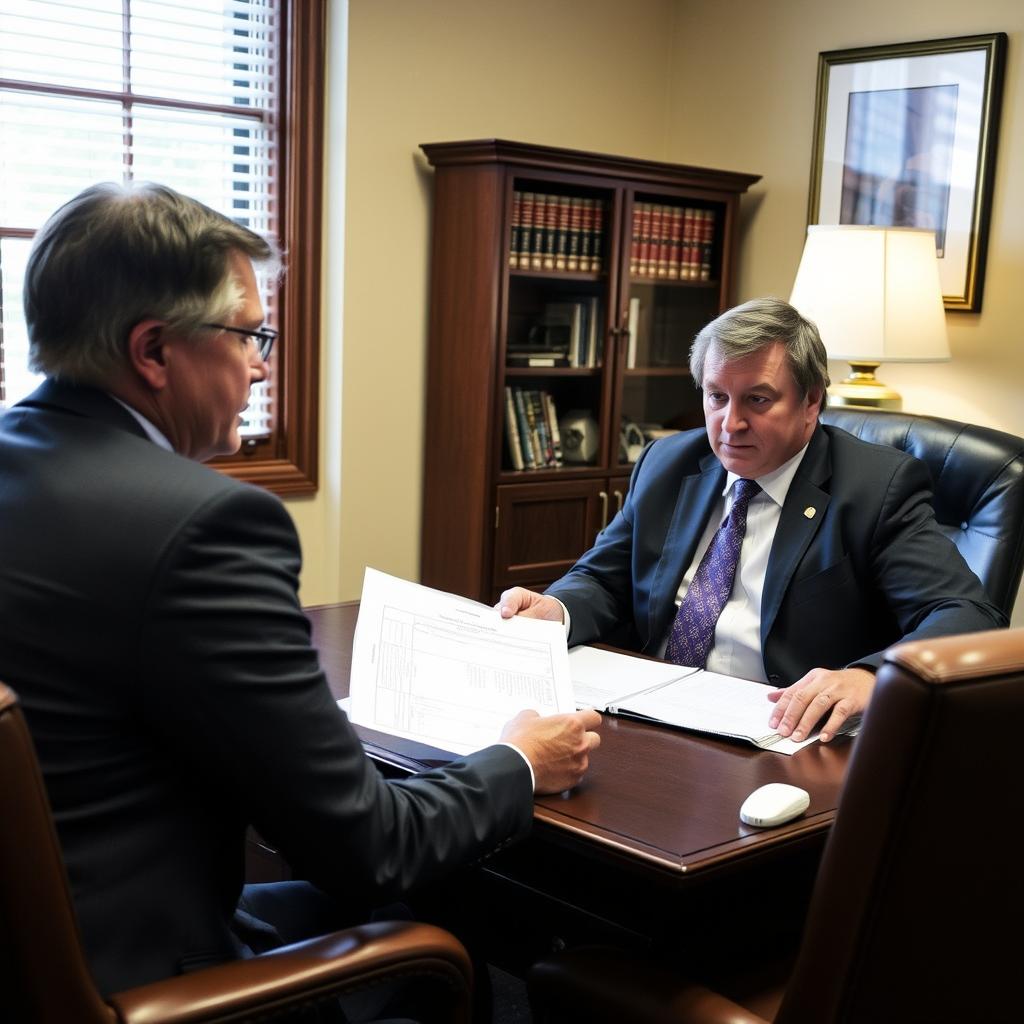
Continuing Criminal Enterprise lawyer Albemarle County, VA
You are a small-business owner in the Charlottesville area, running a legitimate operation along Route 29. Then one morning, federal agents from the DEA and FBI execute a search warrant at your home and business. Weeks later, a sealed indictment is unsealed in the U.S. District Court for the Western District of Virginia, Charlottesville Division, at 255 W Main Street. The charge: Continuing Criminal Enterprise, 21 U.S.C. § 848 — the government is accusing you of being a drug‑trafficking kingpin. A conviction carries a mandatory minimum 20 years in federal prison, with no parole. The U.S. Attorney’s Office in Roanoke is preparing to prove you supervised five or more people and received substantial income from a continuing series of drug felonies. In that moment, you need an attorney who knows the federal courthouse in Albemarle County and can confront the full weight of a federal prosecution. Mr. Sris and his Of Counsel team at Law Offices Of SRIS, P.C. take on exactly those cases. Call (888) 437‑7747 today to request a consultation. Law Offices Of SRIS, P.C. – Advocacy Without Borders.
For a full statutory breakdown of CCE charges, see our comprehensive analysis on srislawyer.com.
Defense Strategy Options for a Federal CCE Case
Charges under 21 U.S.C. § 848 demand an active, detail‑oriented defense. The government must prove beyond a reasonable doubt that you held a supervisory position over five or more participants, engaged in a continuing series of federal drug felonies, and derived substantial income from the enterprise. Mr. Sris and his Of Counsel examine every element. Did you actually supervise five people, or were you one of several equals? Was the income truly “substantial,” or was a large share reinvested in a legitimate business? In many cases, the evidence consists of wiretaps, cooperating witnesses, and financial records — each of which can be challenged on constitutional and procedural grounds. Motions to suppress evidence obtained through flawed warrants, attacks on the credibility of government informants, and thorough forensic accounting often form the backbone of a CCE defense. Where the evidence cannot be fully excluded, the team works to negotiate a plea to a lesser included federal drug offense that avoids the mandatory 20‑year minimum. The strategy is tailored to the specific facts of the Albemarle County case, always with an eye on the sentencing guidelines and the possibility of a substantial‑assistance departure under U.S.S.G. § 5K1.1.
What to Expect When a CCE Case Moves Through the Charlottesville Federal Court
Federal continuing‑criminal‑enterprise prosecutions follow a distinct path, and anyone facing an indictment in the Western District of Virginia needs to understand the terrain. After an arrest or summons, the process typically begins with an initial appearance before a federal magistrate judge in the Charlottesville division. The government will argue for detention, often citing the severity of the charge and the risk of flight. Mr. Sris and his Of Counsel present a robust bail argument, highlighting community ties in the Albemarle‑area, employment history, and the absence of any actual violence. If the court orders detention, the team files a renewed motion periodically as circumstances change. During the pretrial phase, the U.S. Attorney’s Office produces voluminous discovery — wiretap recordings, surveillance logs, bank records, and grand‑jury transcripts. The defense conducts an exhaustive review, files discovery and evidentiary motions, and often engages forensic experts to analyze digital and financial evidence. Cases in the Western District frequently involve multi‑defendant indictments, and coordination among defense counsel adds complexity. The timing is driven by the Speedy Trial Act, but continuances for complex case preparation are common. If the case proceeds to trial, it will be heard in the federal courthouse at 255 W Main Street, before a district judge. Throughout the process, Mr. Sris and his team ensure the client understands each step and that every viable defense is preserved.
Penalties for a CCE Conviction — A Narrative Overview
A federal continuing‑criminal‑enterprise conviction is one of the most severe outcomes in the criminal‑justice system. The statute itself, 21 U.S.C. § 848, imposes a mandatory minimum sentence of 20 years in prison for a first‑time leader of a qualifying drug enterprise. If the defendant has a prior CCE or serious drug‑trafficking conviction, the mandatory minimum jumps to life imprisonment. Because the federal system abolished parole in 1987, a defendant who receives a 20‑year sentence will serve nearly all of it, less only good‑time credits of up to 54 days per year. In addition to incarceration, the court may order forfeiture of any property traceable to the enterprise and impose substantial fines. The United States Sentencing Guidelines also apply, and although they are advisory after United States v. Booker, they exert strong influence over the final sentence. The offense level for a large‑scale drug organization can exceed 38, which, combined with a defendant’s criminal history, can produce a recommended range far above the statutory minimum. In the Western District of Virginia, judges carefully weigh the guidelines, the nature of the enterprise, and any acceptance of responsibility or cooperation. No component of a CCE sentence is trivial, and Mr. Sris and his Of Counsel work thoroughly to present every mitigating factor.
Attorney Credentials — Mr. Sris and His Of Counsel
Mr. Sris, Owner and Founder of Law Offices Of SRIS, P.C., has practiced criminal defense since establishing the firm in 1997. A former prosecutor, he understands how federal investigations are built and how to dismantle the government’s case at every stage. He is admitted in Virginia, Maryland, the District of Columbia, New Jersey, and New York, and he appears regularly in federal courts throughout Virginia, including the Charlottesville Division of the Western District. Mr. Sris and his Of Counsel team bring over 120 years of combined legal experience to complex federal matters. Results may vary. The firm has documented over 4,739 case results. Mr. Sris testified before the Virginia House Courts of Justice Committee in support of 2019 HB 635 (chief patron Del. David Bulova). When you retain the firm for a CCE case in Albemarle County, you work directly with Mr. Sris and the attorneys he personally selects — no case is handed off to an associate, because the firm has none. Every lawyer is an independent Of Counsel engaged through Excella, and Mr. Sris remains founder on the matter.
Frequently Asked Questions — Federal CCE Charges in Albemarle County, Virginia
What is a continuing criminal enterprise charge?
A continuing criminal enterprise charge, or CCE, is a federal felony under 21 U.S.C. § 848 aimed at the leaders of large‑scale drug operations. To secure a conviction, prosecutors must prove you supervised five or more participants, engaged in a continuing series of federal drug felonies, and obtained substantial income from the enterprise. In Albemarle County, these cases are brought in the U.S. District Court for the Western District of Virginia, Charlottesville Division. Because the mandatory minimum sentence is 20 years and there is no federal parole, a CCE indictment means you should contact an experienced federal criminal defense attorney to request a consultation.
How is a CCE case prosecuted in Albemarle County?
Federal CCE cases in the Charlottesville area are investigated by multi‑agency task forces — typically the DEA, FBI, and IRS‑Criminal Investigation — and prosecuted by the U.S. Attorney’s Office for the Western District of Virginia, based in Roanoke. After an indictment, the case proceeds through the federal courthouse at 255 W Main Street. The pretrial phase involves detention hearings, extensive discovery, and motion practice. Mr. Sris and his Of Counsel appear in this courthouse regularly and are familiar with its calendar, the local federal practice, and the prosecutors assigned to drug‑trafficking offenses. Understanding the rhythms of the Charlottesville Division helps ensure no procedural deadline is missed and every defense is timely raised.
What are the penalties for a federal CCE conviction?
A first‑time CCE conviction under 21 U.S.C. § 848 carries a mandatory minimum of 20 years in federal prison. If the defendant has a prior CCE or serious drug‑trafficking predicate, the mandatory minimum rises to life imprisonment. Federal law eliminated parole decades ago, so any sentence must be served almost in full, with only limited good‑time credits. Courts also impose forfeiture of assets traceable to the enterprise and may levy substantial fines. The U.S. Sentencing Guidelines further affect the sentence, often recommending a term far above the statutory floor based on drug quantity, role in the offense, and criminal history. An experienced federal defender can present acceptance‑of‑responsibility credit and substantial‑assistance motions that may reduce the exposure. Because the stakes are so high, anyone charged with CCE should contact an attorney immediately.
What should I do if I am under investigation for a CCE in Virginia?
If you learn — through a target letter, search warrant, or contact by federal agents — that you are under investigation for a continuing criminal enterprise, do not speak with law enforcement without counsel. Exercise your right to remain silent and ask to speak with an attorney. Preserve all documents and electronic records, as they may be essential to your defense. Federal agents often build CCE cases over months or years using cooperating witnesses and electronic surveillance. Retaining an attorney early, before an indictment is returned, can shape the investigation. Law Offices Of SRIS, P.C. represents clients at the pre‑indictment stage, working to avoid charges or narrow their scope. Call (888) 437‑7747 to request a confidential consultation.
How can a federal criminal defense lawyer defend against CCE charges?
A defense against CCE charges starts with a meticulous challenge to the government’s evidence. Counsel may move to suppress wiretap evidence obtained without proper authorization, attack the reliability of confidential informants, or demonstrate that the defendant did not occupy the supervisory role the statute requires. Often the case involves complex financial analysis, and forensic accountants can show that the alleged income was unrelated to drug trafficking. If a trial is not in the client’s interest, the attorney negotiates for a plea to a lesser federal drug offense that avoids the CCE mandatory minimum. Mr. Sris and his Of Counsel have decades of experience in federal court and understand every available avenue to protect a client’s future.
Do I need a lawyer who focuses on federal cases for a CCE charge?
Yes. Federal criminal practice is a distinct discipline with unique procedural rules, sentencing guidelines, and evidentiary standards. State‑court experience does not translate directly to the federal system, where prosecutors have near‑unlimited resources and the Sentencing Guidelines create a complex points‑based calculation. In Albemarle County, the case will be adjudicated in the U.S. District Court for the Western District of Virginia, not the Albemarle County Circuit Court. An attorney who consistently appears in federal court — as Mr. Sris does — is familiar with the local federal judges, the Assistant U.S. Attorneys, and the pretrial‑services procedures that directly affect detention and release decisions. For a charge that begins with a 20‑year mandatory minimum, that familiarity is not a luxury; it is a necessity. Consult with Mr. Sris and his Of Counsel at (888) 437‑7747.
Request a Consultation — Federal CCE Lawyer Serving Albemarle County
If you or a family member faces a continuing‑criminal‑enterprise charge in the Charlottesville area, the time to act is now. Federal indictments move quickly, and the decisions you make in the early days of a case can determine the outcome. Mr. Sris and his Of Counsel team appear regularly at the U.S. District Court for the Western District of Virginia, Charlottesville Division, and have the depth of experience necessary to confront a large‑scale federal prosecution. Reach the firm 24 hours a day at (888) 437‑7747 to schedule a consultation. Meetings are by appointment at the firm’s Shenandoah location or at another mutually convenient venue.
Law Offices Of SRIS, P.C. ? Shenandoah Location ? 505 N Main St, Suite 103, Woodstock, VA 22664 ? By appointment only. Call (888) 437‑7747.
Outbound primary‑source authority links: 21 U.S.C. § 848 — U.S. Code ? U.S. District Court for the Western District of Virginia ? Albemarle County Circuit Court (Virginia state court)
Attorney advertising. Prior results do not guarantee a similar outcome. Case results depend on a variety of factors unique to each case. Results may vary.