
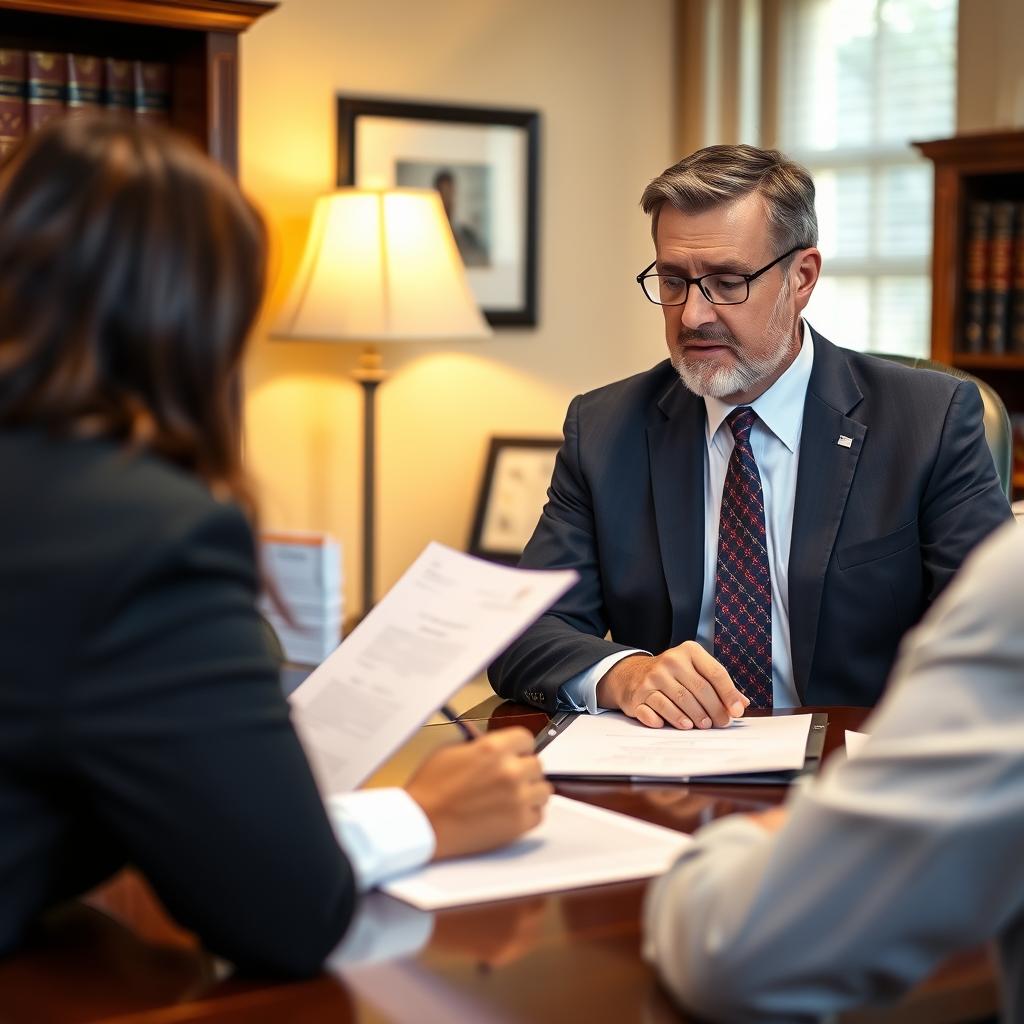
Rappahannock County Felony Conviction Divorce Lawyer — How Does a Felony Impact Your Divorce?
A felony conviction is a fault ground for divorce in Virginia under Va. Code § 20-91(A)(4), requiring a one-year separation period after the spouse’s sentencing. This adds significant complexity to custody, support, and property division in Rappahannock County. A felony conviction divorce lawyer from Law Offices Of SRIS, P.C.
Virginia Law on Divorce After a Felony Conviction
Virginia law explicitly lists a felony conviction as a fault-based ground for divorce. Under Va. Code § 20-91(A)(4), a spouse may file for divorce if the other spouse has been “convicted of a felony, sentenced to confinement for more than one year, and confined for such felony after such conviction, and cohabitation has not been resumed after such conviction.” This means the filing spouse must wait one year from the date the convicted spouse began serving their sentence. The statute requires proof of the conviction and confinement. This legal standard is applied in Rappahannock County Circuit Court, which handles all divorce and equitable distribution matters.
Last verified: April 2026 | Rappahannock County General District Court | Virginia General Assembly
Official Legal Resources
For the full text of the statute, refer to the Va. Code § 20-91 (official Virginia General Assembly site). All family law cases in Rappahannock County are filed at the Rappahannock County General District Court.
How a Felony Conviction Affects Your Rappahannock County Divorce Case
A felony conviction can profoundly impact every aspect of a divorce proceeding in Rappahannock County. In custody disputes under Va. Code § 20-124.3, the court must consider the “mental and physical health of the child and each parent,” which includes a parent’s criminal history and its implications for the child’s safety and welfare. A conviction may affect parenting time and decision-making authority. For spousal support under Va. Code § 20-107.1, the court considers the “circumstances and factors which contributed to the dissolution of the marriage,” which includes fault grounds like a felony. This can influence both the award and amount of support. In equitable distribution, while Virginia law focuses on dividing marital property fairly, the cause of the marriage’s dissolution is not a direct factor under Va. Code § 20-107.3.
- Gather Documentation: Obtain certified copies of the felony conviction order and sentencing documents from the court of record.
- File the Complaint: Your attorney will file a Complaint for Divorce in Rappahannock County Circuit Court, citing the felony conviction ground under Va. Code § 20-91(A)(4).
- Serve Your Spouse: The complaint must be formally served on your spouse, who then has 21 days to file an Answer.
- handle Custody & Support: Your lawyer will prepare arguments for how the conviction impacts custody, visitation, and support, often involving Guardian ad Litem assessments.
- Negotiate or Litigate: Attempt to reach a settlement on property and parenting issues; if not possible, the case proceeds to a contested hearing or trial.
- Final Hearing: Attend the final divorce hearing where the judge will enter a decree addressing all issues, including the grounds based on the felony.
Potential Consequences in a Divorce
In Rappahannock County, a felony conviction in a divorce can lead to restricted custody, impacted spousal support awards, and complex legal proceedings.
| Issue | Potential Impact of a Felony Conviction |
|---|---|
| Custody & Visitation | Court may order supervised visitation, restrict overnight stays, or limit decision-making authority based on the child’s best interests and the crime’s nature. |
| Spousal Support | The convicted spouse’s ability to pay may be reduced due to incarceration; the supporting spouse’s obligation may be affected by fault. |
| Property Division | Virginia’s equitable distribution law (Va. Code § 20-107.3) does not typically consider fault, but dissipation of assets related to the crime may be factored. |
| Legal Process | Requires precise pleading and proof of conviction and confinement; may involve coordinating with criminal defense counsel. |
Results may vary. Prior results do not guarantee a similar outcome.
Why Choose Our Firm for Your Felony Conviction Divorce
Founded in 1997 by former prosecutor Mr. Sris, Law Offices Of SRIS, P.C. brings a unique perspective to complex family law cases involving criminal matters. Our firm-wide experience of over 120 combined years and more than 4,739 case results provides a deep understanding of how criminal and family law intersect. Mr. Sris personally amended Virginia’s equitable distribution statute (Va. Code § 20-107.3), demonstrating a significant influence on the very laws that govern your case. We understand the heightened stakes in a divorce after a felony conviction and provide strategic, compassionate representation focused on protecting your future.
Samantha Rae Powers, Associate Attorney at Law Offices Of SRIS, P.C. — Licensed in VA, FL. Experienced family law and civil litigator. View Samantha Rae Powers’s Profile
Case Results and Client Advocacy
Our firm has a documented record of achieving favorable outcomes in complex family law cases. In Rappahannock County, we have 40 total documented case results across all practice areas with a 98% favorable outcome rate. For instance, our team, including Mr. Sris, has successfully navigated cases where one spouse’s criminal history was a central issue, working to isolate its impact from financial and parenting decisions to secure stable arrangements for our clients and their families.
Results may vary. Prior results do not guarantee a similar outcome.
Felony Conviction Divorce Lawyer Near Rappahannock County
Our Fairfax location serves clients at the Rappahannock County courts (250 Gay Street, Washington, VA). We are accessible via Route 211 and Route 522, serving the communities of Washington, Sperryville, and Flint Hill.
Law Offices Of SRIS, P.C.
4008 Williamsburg Ct, Fairfax, VA 22032, United States
Toll-Free: (888) 437-7747 | Local: (703) 636-5417
By appointment only. 24/7 phone consultations.
FAQs: Divorce After a Felony Conviction in Rappahannock County
Is a felony conviction grounds for divorce in Virginia?
Yes. Under Va. Code § 20-91(A)(4), a felony conviction with a sentence of more than one year of confinement is a fault ground for divorce. The innocent spouse must wait one year after the convicted spouse begins serving the sentence before filing, provided cohabitation has not resumed.
How does a felony conviction affect child custody in Virginia?
It depends heavily on the nature of the felony and the child’s best interests. Under Va. Code § 20-124.3, the court must consider each parent’s mental and physical health. A violent or drug-related felony can lead to supervised visitation or restricted custody. The court will assess the conviction’s relevance to the parent’s ability to provide a safe, stable environment.
Can I get a divorce if my spouse is in prison for a felony?
Yes. You can file for divorce using the felony conviction ground. The process involves serving the divorce papers at the correctional facility. The case will proceed in Rappahannock County Circuit Court, and the incarcerated spouse may participate via video or through appointed counsel for hearings on custody, support, and property.
How long does a felony conviction divorce take in Rappahannock County?
A contested divorce on felony grounds typically takes 9 to 18 months in Rappahannock County. The timeline includes the mandatory one-year waiting period after sentencing, plus time for filing, discovery, possible custody evaluations, and court hearings. An uncontested case after the waiting period may resolve in 2-4 months.
Do I need a criminal conviction divorce lawyer for a felony-based divorce?
It is highly advisable. A divorce after a felony lawyer in Rappahannock County understands the interplay between criminal and family law. They can properly plead the ground, manage the impact on custody and support, and handle the procedural details of dealing with an incarcerated spouse or a spouse with a criminal record.
Related Legal Services in Rappahannock County
If you are facing other legal challenges, our firm provides full representation. You may also need a Rappahannock County criminal defense lawyer to address the underlying charge, or a Rappahannock County DUI lawyer. For broader Virginia family law resources, visit our Virginia Divorce & Family Lawyer hub page. We also serve neighboring areas like Fairfax County.
Page last verified and updated: April 2026. Laws change frequently. For the most current advice regarding your divorce after a felony conviction in Rappahannock County, contact Law Offices Of SRIS, P.C. at (888) 437-7747.