
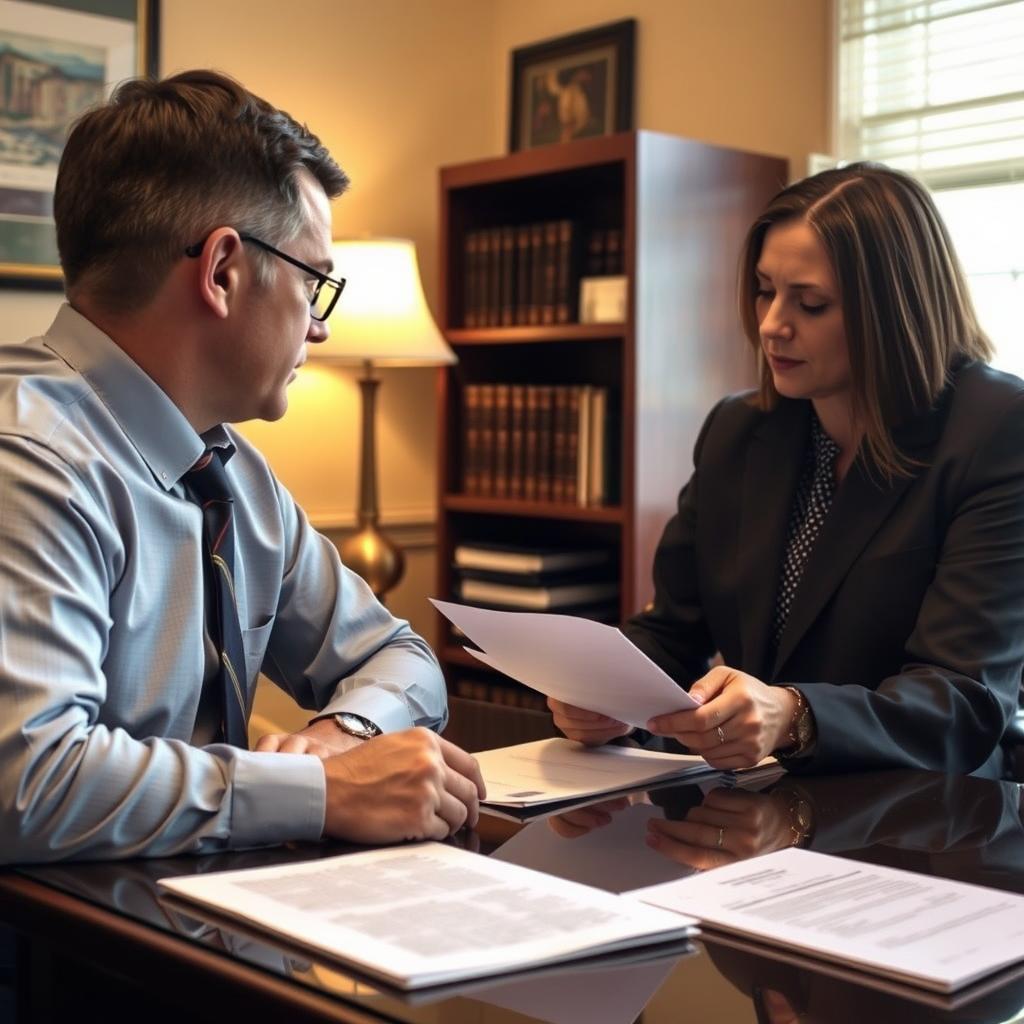
Misprision of a Felony lawyer Madison County, VA
Federal misprision of a felony charges arise under 18 U.S.C. § 4 and expose a person to up to three years of imprisonment. The offense does not involve actively participating in the underlying crime; rather, it punishes an individual who knows that a federal felony occurred and takes an affirmative step to conceal that knowledge—without reporting it to authorities. If you are under investigation or have been contacted by a federal agent in Madison County, Virginia, the matter may proceed before the U.S. District Court for the Western District of Virginia. Mr. Sris and his Of Counsel represent clients facing misprision allegations at the federal courthouse in Charlottesville and throughout the Western District. To discuss your case, reach Law Offices Of SRIS, P.C. at (888) 437-7747. Law Offices Of SRIS, P.C. – Advocacy Without Borders.
Under 18 U.S.C. § 4, misprision of a felony is punishable by up to three years of imprisonment.
Source: 18 U.S.C. § 4. 18 U.S.C. § 4
Reviewed by Mr. Sris, admitted in VA/MD/DC/NJ/NY.
What Is Misprision of a Felony Under Federal Law?
Misprision of a felony is a federal offense codified at 18 U.S.C. § 4. To obtain a conviction, the government must prove four elements beyond a reasonable doubt: that a federal felony was committed; that the defendant knew about that felony; that the defendant failed to notify authorities of the felony as soon as possible; and that the defendant took an affirmative step to conceal the crime. The “affirmative step” requirement is critical—merely remaining silent or failing to report a crime, without more, is generally insufficient. The concealment must be active, such as hiding evidence, misleading investigators, or helping another person avoid detection.
Because the statute does not require the defendant to have participated in the underlying felony, charges can arise even when the accused had no role in the original offense. A person who learns of a federal crime after the fact and then deliberately helps cover it up may face misprision charges separate from the principal crime. In Madison County, these cases are prosecuted by the United States Attorney’s Office for the Western District of Virginia, often following an investigation by the FBI, DEA, or other federal agencies.
Federal Criminal Defense in Madison County, Virginia
Madison County lies within the Sixteenth Judicial District of Virginia’s state court system, but federal criminal prosecutions—including misprision of a felony—are handled in the U.S. District Court for the Western District of Virginia. The Western District covers a large geographic area, and most proceedings for Madison County residents occur at the Charlottesville Division, located at 255 West Main Street. When a matter is indicted, the initial appearance, detention hearing, and arraignment typically take place before a federal magistrate judge in Charlottesville. If the case proceeds to trial, it may be heard in Charlottesville or at another Western District courthouse depending on the calendar.
Federal court procedure differs substantially from Virginia General District Court practice. The federal rules of criminal procedure govern everything from grand jury indictment to discovery and motions practice. Sentencing is conducted under the United States Sentencing Guidelines, which are advisory but carry significant weight. Because there is no parole in the federal system, a sentence for misprision of a felony means the individual serves the vast majority of the imprisonment term imposed. Understanding these local and procedural dynamics is critical to building a defense.
The firm’s Fairfax Location handles federal criminal matters throughout the Charlottesville Division, including Madison County. Mr. Sris and his Of Counsel are familiar with the practices of the U.S. Attorney’s Office for the Western District and the expectations of the magistrate and district judges who preside over these cases. Meetings with the legal team occur by appointment; contact the firm by phone to schedule a consultation.
How a Lawyer Defends Against Misprision of a Felony Charges
Defending a misprision charge starts with a thorough examination of the government’s evidence. An experienced defense attorney will scrutinize whether the prosecution can establish each element of 18 U.S.C. § 4. The knowledge element, in particular, is often challenged—did the defendant genuinely know that a felony had been committed, or was the information vague, second-hand, or unreliable? The “affirmative step” requirement is equally open to contest. Actions that may appear suspicious in retrospect can sometimes be explained as routine or unrelated to any concealment effort.
In many federal investigations, the government attempts to leverage a misprision charge to encourage cooperation. An attorney who knows the local federal practice can evaluate whether the evidence supports the charge and advise a client on how to navigate contact with federal agents without inadvertently waiving rights. Early engagement—before indictment—gives the defense the greatest opportunity to shape the direction of the case, present mitigating information, and explore whether a pre-indictment resolution is possible. If the matter proceeds to indictment, the defense team prepares to challenge evidence through motions, negotiate with the prosecutor, and, if necessary, present the case at trial.
About Mr. Sris and His Of Counsel Team
Mr. Sris, Owner and Founder of Law Offices Of SRIS, P.C., has practiced federal criminal defense since 1997. He is admitted in Virginia, Maryland, the District of Columbia, New Jersey, and New York, and has substantial experience appearing in the U.S. District Court for the Western District of Virginia. Mr. Sris testified before the Virginia House Courts of Justice Committee in support of 2019 HB 635 (chief patron Del. David Bulova). His approach is to keep caseloads manageable so he can remain closely involved in each matter. In federal cases, Mr. Sris works alongside Of Counsel attorneys with backgrounds that strengthen the defense team. Mr. Sris and his Of Counsel bring over 120 years of combined legal experience and have achieved 4,739+ documented firm-wide results. Results may vary.
Frequently Asked Questions
What is the penalty for misprision of a felony in federal court?
The maximum penalty under 18 U.S.C. § 4 is three years of imprisonment, a fine, or both. Fines are set under 18 U.S.C. § 3571, which generally permits a fine of up to $250,000 for a felony. A term of supervised release may also follow imprisonment. The actual sentence in any case depends on the applicable sentencing guideline range, the defendant’s criminal history, and the court’s evaluation of sentencing factors under 18 U.S.C. § 3553(a). Early and thorough defense preparation can influence the outcome. For guidance on your specific situation, reach Law Offices Of SRIS, P.C. at (888) 437-7747.
How does the government prove knowledge of the underlying felony?
The government must show the defendant had actual knowledge that a federal felony was committed, not merely a suspicion. This is typically established through circumstantial evidence—statements made by the defendant, text messages, emails, financial records, or testimony from cooperating witnesses. A defense strategy examines whether the information the defendant received was specific enough to constitute “knowledge” under the law. General rumors or ambiguous communications may not meet the standard. An experienced federal defense attorney can challenge the sufficiency of the knowledge evidence in pretrial motions or at trial.
What counts as an “affirmative step” to conceal a crime?
An affirmative step means the defendant did something more than simply stay silent. Examples include destroying documents, wiping a hard drive, hiding physical evidence, lying to federal agents, or encouraging a witness not to cooperate. The statute does not punish a person who learns of a felony and does nothing—there must be active concealment. Determining whether a particular action crosses the line from passive inaction to active concealment often becomes the central dispute in a misprision case. The defense can argue that the conduct was innocent, unrelated, or occurred before knowledge of the felony was complete.
Do I need a lawyer if I am only a witness to a federal crime?
If you have any reason to believe that federal investigators consider you a possible target of a misprision investigation, you should contact an attorney without delay. Even when a person believes they are merely a witness, federal agents may interpret statements differently. Speaking to agents without counsel can lead to inadvertent admissions that later support a misprision charge. An attorney can communicate with investigators on your behalf, assess whether your actions could be viewed as concealment, and protect your Fifth Amendment rights. To discuss the details of your matter, contact Law Offices Of SRIS, P.C. at (888) 437-7747.
Where are federal misprision cases in Madison County prosecuted?
Madison County residents are prosecuted in the U.S. District Court for the Western District of Virginia. The Charlottesville Division, at 255 West Main Street, handles most federal criminal matters arising from this region. The case is prosecuted by an Assistant United States Attorney assigned to the Western District. Because federal practice differs from state court in procedure, discovery, and sentencing, representation by counsel familiar with the Western District is important. Mr. Sris and his Of Counsel regularly appear in the Charlottesville Division.
Can a misprision of a felony charge be dismissed before trial?
A charge may be dismissed at several stages. The defense can file a motion to dismiss the indictment if it fails to allege an offense or if there is a jurisdictional defect. A motion for judgment of acquittal can be made after the government’s case at trial if the evidence is insufficient. Before indictment, a proactive defense may persuade the prosecutor not to bring charges. Whether a dismissal is achievable depends on the strength of the evidence and the specific facts of the case. A qualified attorney can evaluate the case and advise on the most realistic defense options. For a consultation, reach Mr. Sris and his Of Counsel at (888) 437-7747.
What is the difference between misprision and being an accessory after the fact?
Misprision of a felony under 18 U.S.C. § 4 requires active concealment but does not require that the defendant assisted the felon to avoid apprehension. An accessory after the fact, under 18 U.S.C. § 3, requires that the defendant, knowing a crime was committed, assisted the offender in order to hinder or prevent his apprehension, trial, or punishment. Accessory after the fact carries a maximum penalty of half the maximum imprisonment for the underlying offense. By contrast, misprision tops out at three years regardless of the underlying felony. A person can be charged with both depending on the conduct.
How soon should I contact a lawyer if I am contacted by federal agents?
You should contact a federal criminal defense lawyer before speaking with investigators. Federal agents are trained to build cases through interviews, and even a casual conversation can produce statements later used to support a misprision charge. Invoking your right to remain silent and your right to counsel does not constitute evidence of guilt. Early legal guidance can help you avoid missteps that complicate the defense. Mr. Sris and his Of Counsel team take a cautious, thorough approach to federal matters. Call (888) 437-7747 to arrange a consultation.
Related Practice Pages
Federal Criminal Lawyer Fairfax County, VA · Federal Criminal Lawyer Prince William County, VA · Federal Criminal Lawyer Manassas (City), VA
Additional Resources
Review the federal statute: 18 U.S.C. § 4. Visit the website of the U.S. District Court for the Western District of Virginia for local rules and court information. For broader federal criminal procedure, see the Federal Rules of Criminal Procedure.
Attorney advertising. Prior results do not guarantee a similar outcome. Case results depend on a variety of factors unique to each case. Results may vary. Attorney responsible for this advertising: Mr. Sris.