
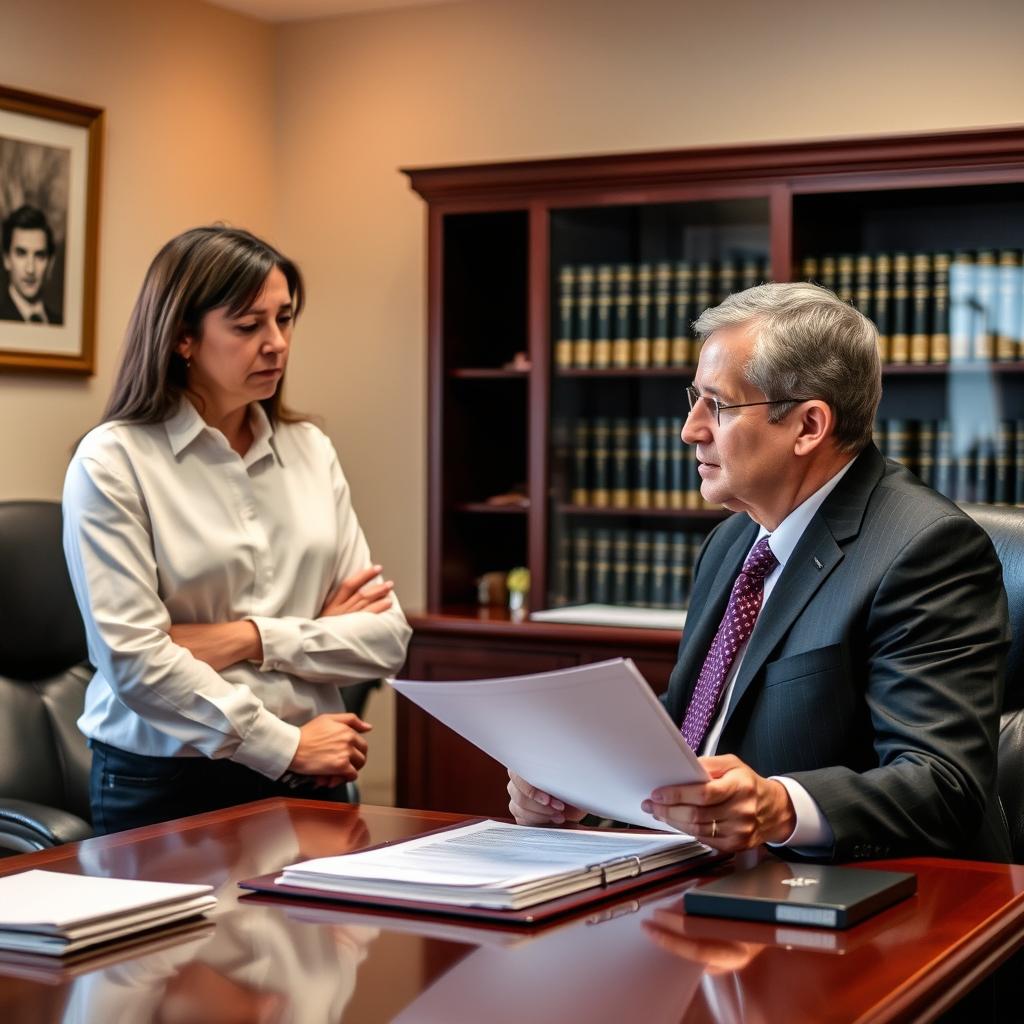
Obstruction of Justice Lawyer Albemarle County, VA
An accusation of obstruction of justice carries serious repercussions — a criminal conviction can result in incarceration, fines, and a permanent criminal record that affects employment, housing, and professional licenses. If you are facing obstruction charges in Albemarle County, Virginia, the attorney you choose to stand beside you matters. Law Offices Of SRIS, P.C. represents individuals charged with obstruction of justice under Va. Code § 18.2-460 before the Albemarle County General District Court and Albemarle County Circuit Court. Mr. Sris and his Of Counsel bring extensive experience in criminal defense to these matters, drawing on insight from a former prosecutor and a former Virginia State Trooper. To request a consultation about your case, call (888) 437-7747. Law Offices Of SRIS, P.C. — Advocacy Without Borders.
What Obstruction of Justice Means in Albemarle County
Virginia law defines obstruction of justice broadly. Under Va. Code § 18.2-460, a person who knowingly obstructs a judge, law‑enforcement officer, or other court official in the performance of their duties commits a Class 1 misdemeanor. That offense carries up to 12 months in jail and a fine of up to $2,500. When the obstruction involves threats of bodily harm or the use of force, the charge is elevated to a Class 5 felony, punishable by one to ten years in prison. The same statute also covers conduct such as obstructing a magistrate, a witness, or an attorney for the Commonwealth.
In Albemarle County, misdemeanor obstruction cases are prosecuted by the Commonwealth’s Attorney in the Albemarle County General District Court, located at 350 Park Street, Charlottesville, VA 22902. Felony obstruction charges proceed to the Albemarle County Circuit Court after a preliminary hearing. The courts follow the Virginia Rules of Criminal Procedure, and defendants have an absolute right to a jury trial in Circuit Court for any offense that carries potential jail time. Understanding how local prosecutors and judges handle obstruction allegations is critical when building a defense.
How Mr. Sris and His Of Counsel Handle Obstruction of Justice Cases
Each obstruction charge is examined from every angle. Mr. Sris and his Of Counsel first assess whether the alleged conduct actually constitutes obstruction under Va. Code § 18.2-460. Often, what an officer perceives as interference may be protected First Amendment speech, a misunderstanding, or a lack of intent to impede law enforcement. The defense may challenge the officer’s account, scrutinize body‑worn camera footage, and interview witnesses to expose gaps in the prosecution’s narrative.
Because the stakes are high — even a misdemeanor can derail a career or immigration status — the team explores every available option. In appropriate cases, negotiations with the Commonwealth’s Attorney may lead to an amended charge or a deferred disposition under Virginia’s first‑offender programs. If trial is necessary, Mr. Sris and his Of Counsel prepare thoroughly, cross‑examining witnesses and presenting evidence with the benefit of decades of trial experience, supported by 4,739+ documented firm-wide results. Every step is guided by the goal of securing the trusted achievable outcome for the individual client. Results may vary.
About Mr. Sris and His Of Counsel Team
Mr. Sris, Owner and Founder of Law Offices Of SRIS, P.C., has practiced criminal defense since 1997. A former prosecutor, he understands how the Commonwealth’s Attorney builds a case and uses that knowledge to anticipate the government’s strategy. He is admitted to practice in Virginia, Maryland, the District of Columbia, New Jersey, and New York. Mr. Sris has testified before the Virginia House Courts of Justice Committee in support of 2019 HB 635 (chief patron Del. David Bulova), reflecting his deep engagement with Virginia law.
Mr. Sris is supported by a team of Of Counsel attorneys who contribute their own distinctive backgrounds — including a former Virginia State Trooper whose law‑enforcement career provides insight into police procedures and investigative techniques. Together, Mr. Sris and his Of Counsel bring over 120 years of combined legal experience, supported by 4,739+ documented firm-wide results. Results may vary. The firm’s Shenandoah location at 505 N Main St, Suite 103, Woodstock, VA 22664 serves clients in Albemarle County and the surrounding region. Appointments are available by calling (888) 437-7747.
Frequently Asked Questions
What is the penalty for obstruction of justice in Albemarle County?
Under Va. Code § 18.2-460, a simple obstruction without threats is a Class 1 misdemeanor, carrying up to 12 months in jail and a fine of up to $2,500. When the obstruction involves a threat of bodily harm or the use of force, the offense becomes a Class 5 felony, which exposes a person to one to ten years in prison. The specific sentence in any case depends on the facts, the defendant’s criminal history, and the arguments presented by counsel. An experienced defense attorney can explain the range of possibilities.
For help understanding how the law applies to your situation, contact Law Offices Of SRIS, P.C. at (888) 437-7747.
How does a Virginia lawyer defend against obstruction of justice charges?
Defense strategies focus on whether the accused person actually hindered law enforcement. An attorney may challenge the evidence by arguing that the conduct was protected speech, that the officer’s commands were not lawful, or that there was no intent to obstruct. Procedural defenses, such as an unlawful stop or arrest, can also weaken the prosecution’s case. When the evidence is strong, negotiating with the Commonwealth’s Attorney for an amended charge or a deferred disposition may be an appropriate approach. Every case is different, and the defense is tailored to the specific facts.
Can obstruction of justice charges be expunged in Virginia?
Virginia permits expungement for charges that end in acquittal, dismissal, or nolle prosequi under Virginia law. A conviction for obstruction of justice cannot be expunged. A first‑time offender may, however, be eligible for a deferred disposition that results in dismissal and later expungement. The petition is filed in the Albemarle County Circuit Court. Because eligibility is fact‑specific, speaking with an attorney is essential to determine whether expungement may be available.
What should I do if I am facing obstruction of justice charges in Virginia?
Contact a criminal defense lawyer immediately. Do not discuss the facts of the case with anyone other than your attorney. Preserve any evidence — including video, photographs, and witness contact information — that could support your defense. Court deadlines and procedural requirements begin to run from the moment charges are filed, so early engagement of counsel is critical. An attorney can evaluate the evidence, identify defenses, and begin working to protect your rights.
How does the court process work in Albemarle County for obstruction cases?
Misdemeanor obstruction cases are heard in the Albemarle County General District Court. At the arraignment, the defendant enters a plea; if the plea is not guilty, a trial date is set. For felony obstruction, a preliminary hearing in the General District Court determines whether probable cause exists to send the case to the Circuit Court. If the case proceeds, the Circuit Court handles the trial and sentencing. Throughout the process, counsel can file motions, negotiate with the prosecutor, and advocate for the defendant at every stage.
Do I need a lawyer for an obstruction of justice charge in Albemarle County?
Yes. Obstruction of justice is a criminal charge that carries the possibility of jail time, a criminal record, and collateral consequences that can affect immigration status, professional licenses, and security clearances. Even a seemingly minor misdemeanor can have long‑term repercussions. An attorney who understands Virginia criminal procedure and the local practices of the Albemarle County courts can explain the options, protect your rights, and work toward a favorable resolution.
Outbound Authority References
Virginia Code Title 18.2 — Crimes and Offenses ·
Albemarle County General District Court ·
Albemarle County Circuit Court
Attorney advertising. Prior results do not guarantee a similar outcome. Case results depend on a variety of factors unique to each case. Results may vary.