
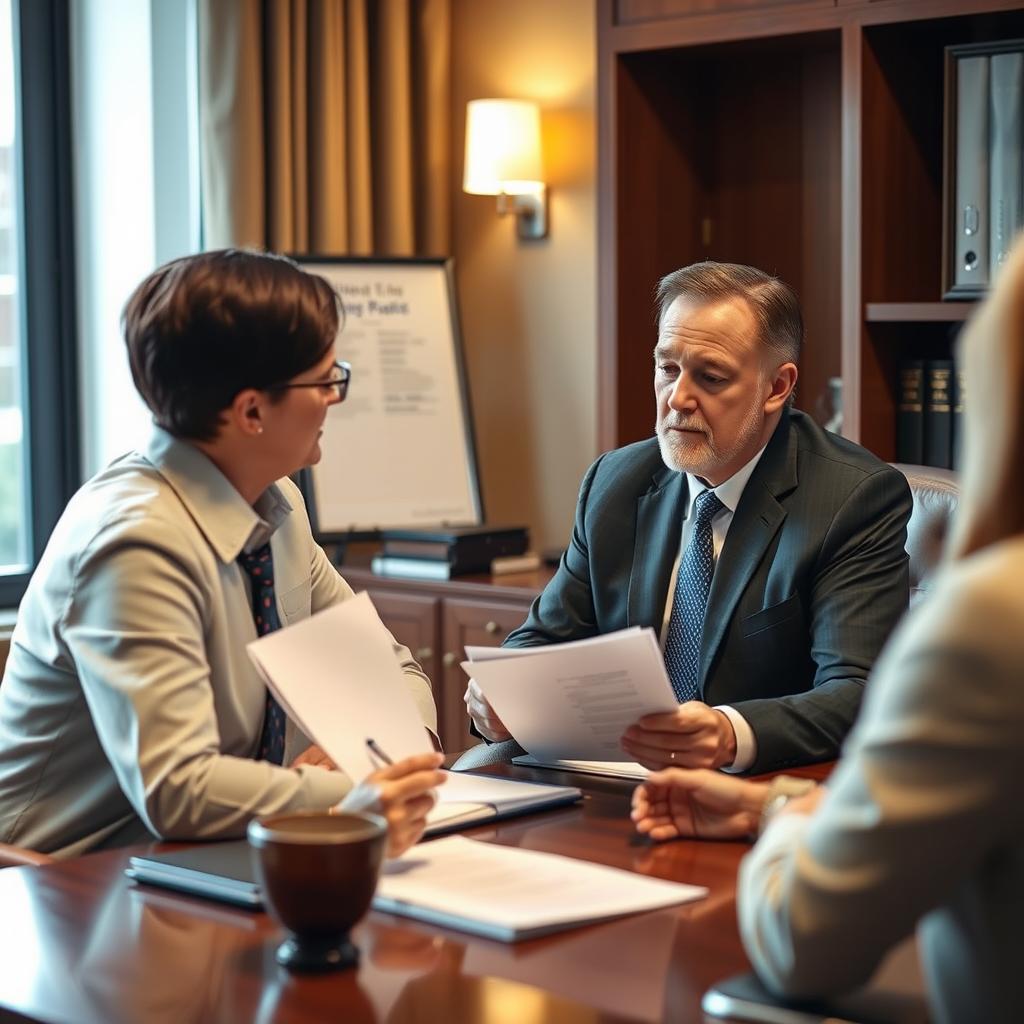
What is commercial fraud in Charlottesville
Commercial fraud in Charlottesville encompasses deceptive practices within business transactions that cause financial harm to a company, investor, or business partner. These cases range from fraudulent misrepresentations in the sale of a business to securities violations and complex shareholder disputes. Law Offices Of SRIS, P.C. represents clients in civil commercial fraud claims in Charlottesville, Albemarle County, and throughout Central Virginia. Our attorneys work to uncover the facts, evaluate the financial impact, and pursue recovery through negotiation or litigation. To discuss a potential commercial fraud matter, call (888) 437-7747. Law Offices Of SRIS, P.C. – Advocacy Without Borders.
Understanding Commercial Fraud in Charlottesville
Commercial fraud arises when a person or entity knowingly makes a false statement or conceals a material fact in a business setting, and another party relies on that deception to their detriment. In Charlottesville, these claims frequently touch on the Virginia Uniform Commercial Code, the Virginia Securities Act, and common-law principles of fraud and misrepresentation. Because many businesses in the Charlottesville area involve cross-border transactions—between Northern Virginia, the Shenandoah Valley, and Richmond—the reach of a single fraudulent act can affect multiple parties and multiple jurisdictions.
A commercial fraud case may involve forged financial statements used to induce investment, a partner diverting corporate assets for personal use, or a vendor materially misrepresenting the quality of goods in a supply contract. In each scenario, the injured party must prove that the defendant knowingly made a false representation, that the plaintiff justifiably relied on it, and that the reliance caused measurable financial loss. Matters of this nature are typically heard in the Charlottesville Circuit Court or the Albemarle County Circuit Court, where procedural rules require clear pleadings and thorough evidentiary support. Law Offices Of SRIS, P.C. helps clients navigate these requirements and build a record that supports their claims.
Frequently Asked Questions
What are common examples of commercial fraud?
Common examples of commercial fraud include securities fraud, financial statement fraud, and fraudulent misrepresentation in a business sale. Securities fraud can involve insider trading, stock manipulation, or the sale of unregistered securities. Financial statement fraud occurs when a company’s earnings, assets, or liabilities are materially misstated to deceive shareholders or lenders. Fraud in a business sale might involve inflating customer contracts or hiding liabilities. Each instance requires a showing of intentional deception, reasonable reliance, and resulting damages, making these claims fact-intensive and often dependent on documentary and forensic evidence.
How is commercial fraud proven in Virginia?
To prove commercial fraud in Virginia, the plaintiff must establish by clear and convincing evidence that the defendant knowingly made a false representation of material fact. The plaintiff must also show that the representation was made with the intent to deceive, that the plaintiff relied on it in a manner that was reasonable under the circumstances, and that the reliance proximately caused monetary loss. In business cases, this often means presenting emails, accounting records, contracts, and expert testimony. Because the standard of proof is higher than in ordinary contract disputes, early case assessment and careful evidence preservation are critical steps.
What is the statute of limitations for commercial fraud in Virginia?
A civil action for fraud in Virginia must be commenced within two years after the cause of action accrues. Under Va. Code § 8.01-243(A), actions for damages resulting from fraud are subject to a two-year limitations period. Accrual is governed by the discovery rule in § 8.01-249(1), meaning the clock starts running when the fraud is discovered or, through the exercise of due diligence, reasonably should have been discovered. Because the discovery date can be disputed, it is important to consult an attorney as soon as potential fraud is suspected in order to protect the claim.
What damages can I recover in a commercial fraud case?
In a commercial fraud case, a plaintiff may recover actual damages, which are the financial losses directly caused by the fraud. In some circumstances, punitive damages may also be available if the defendant’s conduct was willful or exhibited a conscious disregard for the plaintiff’s rights. Virginia law also permits recovery for consequential damages that were a foreseeable result of the misrepresentation. The calculation of damages often requires forensic accounting to trace the path of funds and quantify lost business opportunities or diminished asset value. Each case is unique and recovery depends on the specific facts.
Is commercial fraud a civil or criminal matter?
Commercial fraud can be both a civil matter and a criminal offense, depending on the nature and severity of the conduct. Civil commercial fraud claims seek money damages for the injured party; these are brought by private litigants in state or federal court. Criminal charges, such as wire fraud or securities fraud under federal law, are brought by government prosecutors and can result in fines and imprisonment. A single course of conduct can give rise to both civil and criminal proceedings. A civil attorney can help you evaluate the viability of a civil claim and navigate any parallel government investigation.
What is the difference between commercial fraud and breach of contract?
Commercial fraud requires a false representation made with intent to deceive, while breach of contract arises from a failure to perform under an agreement. A contract dispute may involve a promise that was not kept; fraud involves a lie that was told to induce the contract. In a fraud claim, the plaintiff must prove the defendant’s state of mind and knowledge of the falsity. In a contract claim, the focus is on whether the contractual terms were violated. Claims for fraud and breach of contract are often pled together when a party alleges that misrepresentations were made during contract negotiations.
What role does the Virginia Uniform Commercial Code play in fraud disputes?
The Virginia Uniform Commercial Code (UCC) governs transactions in goods and certain commercial paper, and its provisions can affect fraud claims involving sales, leases, and negotiable instruments. For example, a seller’s false statements about a product’s quality can give rise to both a UCC warranty claim and a common-law fraud claim. The UCC also contains rules about the formation of contracts and the obligations of good faith, which become relevant when a party alleges they were misled. Understanding which statutory framework applies is essential for proper case strategy and pleading.
Can I sue for securities fraud in Charlottesville?
Yes, an individual or entity harmed by securities fraud in the Charlottesville area may bring a civil action under the Virginia Securities Act and, in some cases, federal securities laws. Securities fraud can include misstatements in a prospectus, market manipulation, or the sale of unregistered securities. Virginia’s securities statutes impose disclosure obligations on issuers and brokers and provide a private right of action for fraudulent or deceptive practices in connection with the offer or sale of securities. Because these cases intersect with both state and federal regulation, experienced counsel can help evaluate the correct venue and remedy.
When should I contact a commercial law attorney about suspected fraud?
You should contact a commercial law attorney as soon as you suspect fraud or discover evidence of deception in a business transaction. Early legal involvement helps preserve records, identify potential defendants, and prevent the destruction of evidence. Delays can jeopardize the claim because Virginia’s two-year statute of limitations for fraud can begin running on the date of discovery. An attorney can evaluate whether the elements of fraud are present, assess the strength of the evidence, and advise on the trusted path forward. For a consultation, reach Law Offices Of SRIS, P.C. at (888) 437-7747.
Do I need a lawyer for a commercial fraud claim?
While you are not legally required to hire an attorney to pursue a commercial fraud claim, these cases are legally and factually complex and benefit from experienced representation. Proving fraud requires gathering documents, hiring forensic experts, meeting heightened pleading standards, and presenting evidence to a jury. A party acting alone may miss critical deadlines or fail to develop arguments that meet the clear-and-convincing standard. An attorney familiar with Virginia’s commercial and procedural law can build the evidentiary record and navigate the court system efficiently.
How does commercial fraud differ from consumer fraud?
Commercial fraud arises in business-to-business transactions and typically involves larger sums, more complex relationships, and sophisticated documentation, while consumer fraud involves deceptive practices targeting individuals for personal goods or services. Consumer fraud claims often rely on the Virginia Consumer Protection Act, which provides specific remedies for unfair or deceptive practices aimed at consumers. Commercial fraud claims rely on common-law fraud principles and may involve securities or contractual violations. The distinction is important because the legal standards and available damages differ, influencing how a particular case is pleaded and litigated.
About Mr. Sris and the Firm’s Of Counsel Attorneys
Mr. Sris, Owner and Founder of Law Offices Of SRIS, P.C., has practiced since 1997. He is admitted in Virginia, Maryland, the District of Columbia, New Jersey, and New York, and brings experience as a former prosecutor to complex business litigation. Mr. Sris and the firm’s Of Counsel attorneys represent clients in commercial fraud matters in the Charlottesville area, appearing in the Albemarle County Circuit Court and the Charlottesville Circuit Court. Together, they bring extensive combined legal experience to business fraud cases, from pre‑suit investigation through trial. Results may vary.
For additional commercial law resources in Central Virginia, see also our pages for Albemarle County, Greene County, and Waynesboro.
Virginia Code Title 13.1 |
SCC business entity filings |
Charlottesville Circuit Court
Attorney advertising. Prior results do not guarantee a similar outcome. Results may vary.
Case results depend on a variety of factors unique to each case.