
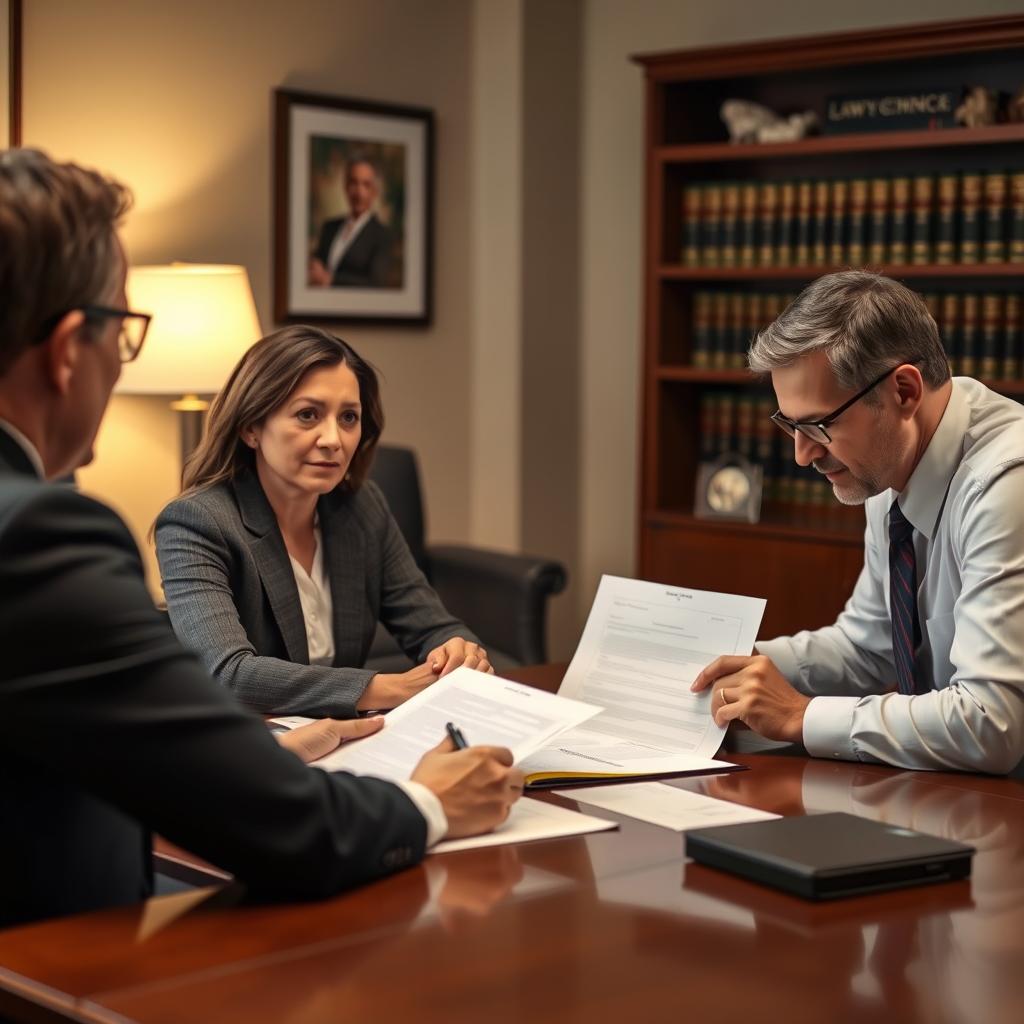
What makes a contract legally binding in Charlottesville
Under Virginia law, a contract becomes legally binding in Charlottesville—or anywhere in the Commonwealth—when four core elements are present: offer, acceptance, consideration, and mutual assent. One party must make a clear offer, the other must accept it, something of value (consideration) must be exchanged, and both sides must genuinely intend to be bound by the agreement. These principles are not unique to Charlottesville, but the way they are applied in local courts—such as the Charlottesville General District Court or the Charlottesville Circuit Court—often turns on the specific facts of the transaction and the language of the agreement. For those dealing with a contract dispute or uncertain whether an agreement they signed in the Charlottesville area is enforceable, Mr. Sris and the firm’s Of Counsel attorneys can evaluate the circumstances and explain how Virginia contract law applies. To request a consultation, call (888) 437-7747. Law Offices Of SRIS, P.C. – Advocacy Without Borders.
How Virginia contract principles apply in Charlottesville
Contract law in Virginia is largely a product of common-law doctrines that have been refined by appellate decisions, supplemented by statutes such as the Virginia Uniform Commercial Code (Title 8.2) for sales of goods and the Statute of Frauds (Va. Code § 11-2) that requires certain agreements to be in writing. A Charlottesville business owner, for example, who enters into a supply contract is subject to the same legal standards as someone in Richmond or Fairfax. What differs is the court where a dispute is heard. Matters up to (exclusive of interest and costs) may be filed in the General District Court, while larger claims proceed to Circuit Court. The Charlottesville courts apply the same procedural rules as any Virginia circuit, but local practices—such as how mediation or pretrial conferences are scheduled—can influence how quickly a contract dispute moves through the system.
Because the enforceability of a contract frequently hinges on whether the parties intended to be legally bound, Virginia courts look at the objective manifestations of intent, not at what a party later claims they were thinking. Words, conduct, and surrounding circumstances all matter. For an agreement that involves real estate, goods worth more than $500, or performance that cannot be completed within one year, the Statute of Frauds also requires a signed writing. In Charlottesville, Mr. Sris and the firm’s Of Counsel attorneys regularly review contracts to determine whether they satisfy these requirements, helping clients understand their rights before litigation becomes necessary.
Frequently Asked Questions
What are the four elements that make a contract binding in Virginia?
A binding contract in Virginia requires a definite offer, an unconditional acceptance of that offer, consideration (something of value exchanged), and mutual assent (a meeting of the minds). If any one of these elements is missing, a court may find that no enforceable contract was formed. These requirements apply equally in Charlottesville as they do across the state. In practice, disputes often center on whether a party’s conduct or statements amounted to an offer or acceptance, and whether the consideration was legally sufficient.
Does a contract have to be in writing to be enforceable in Charlottesville?
Not always—many oral contracts are enforceable in Virginia, but certain agreements must be in writing to satisfy the Statute of Frauds. Virginia Code § 11-2 lists the categories that require a signed writing, including contracts for the sale of land, agreements that cannot be performed within one year, and contracts for the sale of goods priced at $500 or more (under the UCC). If an oral agreement falls into one of these categories, a Charlottesville court may refuse to enforce it unless there is a sufficient written memorandum.
What happens if one party breaches a contract in Virginia?
The non-breaching party may be entitled to monetary damages, specific performance, or other remedies depending on the circumstances. In Virginia, the general rule is that a plaintiff may recover compensatory damages designed to put them in the position they would have occupied had the contract been performed. For written contracts, a lawsuit must be filed within five years of the breach (Va. Code § 8.01-246(2)). For oral contracts, the limitations period is three years (Va. Code § 8.01-246(4)). Mr. Sris and the firm’s Of Counsel attorneys examine the facts to determine which remedy is most appropriate and whether any defenses exist.
Can a contract be binding even if it wasn’t signed by both parties?
Yes—a contract can be binding without formal signatures if the parties’ conduct shows mutual assent to the terms. Virginia courts look at the parties’ actions: if one side performs and the other accepts the benefit, a contract may be implied in fact. However, unsigned agreements can be harder to prove. The best practice is always to reduce an agreement to writing, but an experienced attorney can still argue that an enforceable contract existed based on the parties’ behavior.
What role does consideration play in a Virginia contract?
Consideration is the bargained-for exchange—each party must give something of value to the other for a contract to be binding. The consideration can be money, property, a promise to do something, or even a promise to refrain from doing something. In Charlottesville, as anywhere, a gratuitous promise without consideration is generally unenforceable. Courts rarely inquire into the adequacy of consideration; they only require that some legal value be present.
Do I need a lawyer to review a contract before I sign it in Charlottesville?
You are not legally required to hire a lawyer, but having an experienced attorney review a contract can help you avoid unforeseen obligations and protect your interests. Many Charlottesville residents and business owners find that a careful review reveals terms that could create financial exposure, trigger default provisions, or limit future opportunities. Mr. Sris and the firm’s Of Counsel attorneys offer consultations to evaluate proposed agreements and explain the legal effect of the language.
How do courts in Charlottesville enforce a contract?
Virginia courts enforce contracts by applying the plain meaning of the document and interpreting ambiguous terms against the party who drafted them. If a breach has occurred, the court may award damages, order specific performance (typically only for unique goods or real estate), or grant other equitable relief. Litigation in Charlottesville typically begins with the filing of a Complaint, followed by discovery and—if the case is not settled—a trial before a judge or jury.
What is the statute of limitations for a breach of contract claim in Virginia?
The statute of limitations for breach of a written contract in Virginia is five years from the date of breach (Va. Code § 8.01-246(2)). For an oral contract, the period is three years (Va. Code § 8.01-246(4)). If a lawsuit is not filed within the applicable period, the claim is likely barred. Because determining exactly when the breach occurred can be complex, Mr. Sris and the firm’s Of Counsel attorneys recommend seeking legal advice as soon as a dispute arises.
Is a verbal agreement enforceable in Charlottesville?
A verbal (oral) agreement is enforceable in Virginia unless it falls within one of the categories covered by the Statute of Frauds. Even when enforceable, oral contracts can be difficult to prove because the terms often come down to one person’s word against another’s. Having any writing—emails, text messages, notes—that captures the essential terms can help, but Mr. Sris and the firm’s Of Counsel attorneys can also assess whether the parties’ conduct created an enforceable agreement.
What should I do if I am unsure whether a contract I signed is valid?
If you have doubts about the validity of a contract, the safest step is to seek legal advice before taking any action that could be viewed as a breach. An attorney can evaluate whether all elements of a binding contract are present, whether any defenses such as fraud, duress, or lack of capacity might apply, and what your options are going forward. To discuss your specific situation with Mr. Sris and the firm’s Of Counsel attorneys, call (888) 437-7747.
About Mr. Sris and the Firm’s Of Counsel Attorneys
Mr. Sris, Owner and Founder of Law Offices Of SRIS, P.C., has practiced law since 1997 and is admitted in Virginia, Maryland, the District of Columbia, New Jersey, and New York. A former prosecutor, Mr. Sris draws on extensive courtroom experience when evaluating contract disputes. He testified before the Virginia House Courts of Justice Committee in support of 2019 HB 635 (chief patron Del. David Bulova). The firm’s Of Counsel attorneys bring extensive combined legal experience. Results may vary.
For a consultation in Charlottesville, reach Mr. Sris and the firm’s Of Counsel attorneys at (888) 437-7747.
Contract lawyer Fairfax County •
Contract lawyer Prince William County •
Contract lawyer Manassas •
Contract lawyer Fairfax City
Learn more from these official Virginia resources:
Virginia Code •
Virginia Judicial System •
SCC business entity filings
Attorney advertising. Prior results do not guarantee a similar outcome.
Case results depend on a variety of factors unique to each case.