
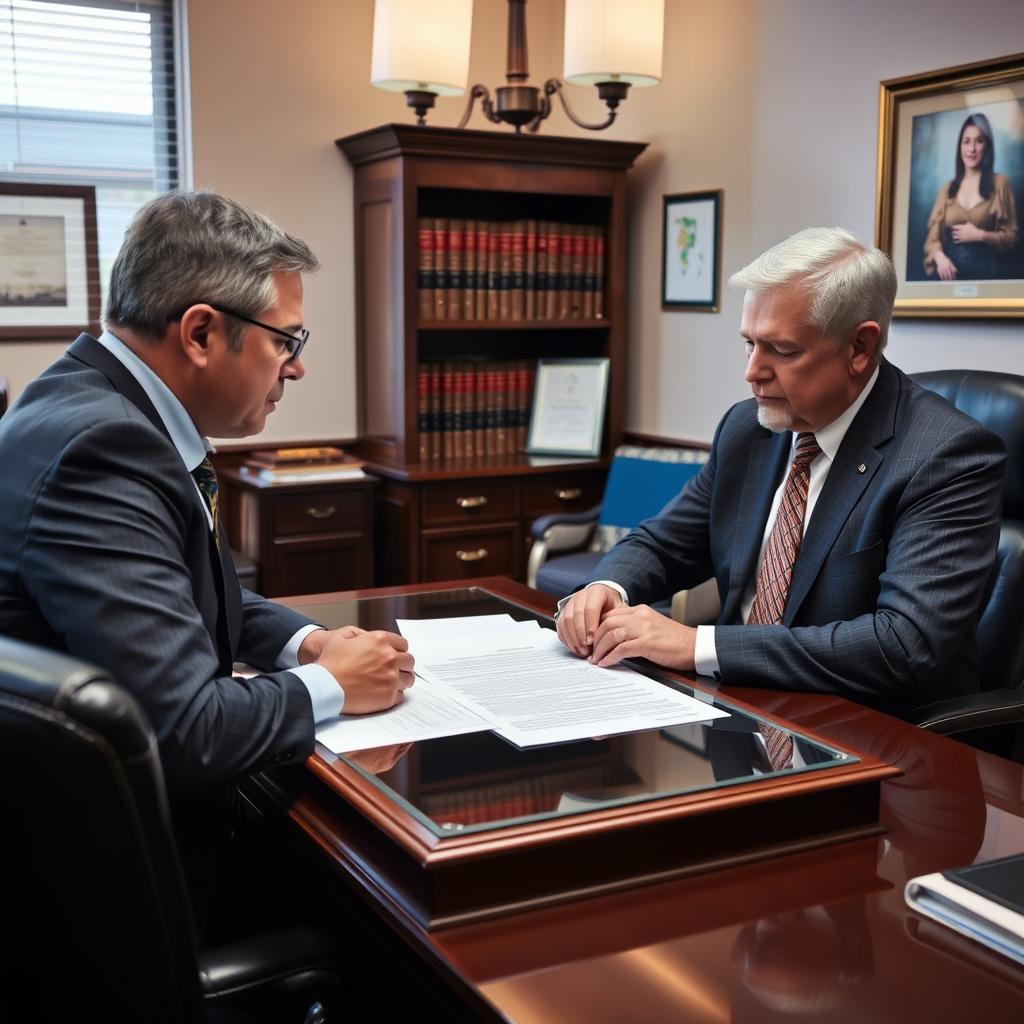
Contract Negotiation Lawyer Culpeper County
You need a Contract Negotiation Lawyer Culpeper County to protect your business and personal interests. Law Offices Of SRIS, P.C.—Advocacy Without Borders. provides direct legal counsel for drafting and reviewing agreements. Our team secures favorable terms and identifies potential liabilities before you sign. We handle commercial leases, employment contracts, and service agreements specific to Culpeper County. (Confirmed by SRIS, P.C.)
Statutory Definition of Contract Law in Virginia
Virginia contract law is primarily governed by common law principles and specific statutes like the Virginia Uniform Commercial Code. While there is no single “contract statute,” agreements are enforced under Virginia common law which requires offer, acceptance, and consideration. The Virginia Code, particularly Title 8.2 (UCC) for goods and Title 11 (Construction) for services, provides the statutory framework. Breach of contract actions are heard in Virginia’s civil court system, where remedies like damages and specific performance are determined by a judge or jury.
Contract disputes in Culpeper County are civil matters, not criminal. The foundation is judge-made common law, not a single penal code. This means the rules are built from court decisions over centuries. Key elements for a valid contract include mutual assent, legal purpose, and capacity of the parties. A Contract Negotiation Lawyer Culpeper County must understand how these principles are applied locally. The Culpeper County Circuit Court interprets these rules in real cases every term.
Virginia courts enforce written and oral contracts, but written ones are far stronger. The Statute of Frauds in Virginia requires certain contracts to be in writing. This includes agreements for the sale of real estate or contracts that cannot be performed within one year. A deal negotiation lawyer Culpeper County ensures your agreement meets these formal requirements. Failure to comply can render an otherwise valid agreement unenforceable in court.
The goal of contract law is to bind parties to their promises. When a breach occurs, the non-breaching party is entitled to a legal remedy. The standard remedy is monetary damages to put the injured party in the position they would have been in had the contract been performed. In some cases, a court may order specific performance, compelling a party to fulfill their obligations. A contract terms negotiation lawyer Culpeper County drafts agreements to minimize breach risks from the start.
What are the key elements of a binding contract in Virginia?
Virginia law requires offer, acceptance, consideration, mutual assent, capacity, and legality. An offer is a definite proposal to do something. Acceptance must be an unqualified agreement to the offer’s terms. Consideration is the value exchanged, which can be money, a promise, or an act. Mutual assent means both parties understand and agree to the same essential terms. Capacity requires parties to be of legal age and sound mind. Legality means the contract’s purpose must be lawful.
How does the Virginia UCC affect business contracts?
The Virginia Uniform Commercial Code (UCC) governs contracts for the sale of goods. It applies to transactions involving movable personal property, not real estate or services. The UCC provides default rules for terms like delivery, payment, and warranties. It allows for significant freedom of contract but fills gaps where an agreement is silent. For business contracts involving goods in Culpeper County, a lawyer must apply both the UCC and common law principles.
What is the statute of limitations for breach of contract in Virginia?
The statute of limitations for filing a breach of contract lawsuit in Virginia is generally five years for written contracts. The clock starts ticking when the breach occurs or is discovered. For oral contracts, the limitation period is three years. This deadline is strict, and missing it typically bars the claim forever. A Contract Negotiation Lawyer Culpeper County monitors these deadlines to protect your right to sue or defend.
The Insider Procedural Edge in Culpeper County
Contract disputes are filed at the Culpeper County Circuit Court located at 135 West Cameron Street, Culpeper, VA 22701. This court handles all civil claims where the amount in controversy exceeds $25,000, including breach of contract cases. The filing fee for a civil complaint in Circuit Court is currently $84. The court operates on a strict procedural timeline set by the Virginia Supreme Court Rules. Local Rule 3:1 requires attorneys to file a Civil Case Cover Sheet with every new complaint. Knowing this local rule prevents immediate procedural dismissal.
The Culpeper County General District Court handles smaller contract claims under $25,000. Its address is 135 West Cameron Street, Culpeper, VA 22701, in the same building complex. The filing fee for a Warrant in Debt (the initiating document) is $52. General District Court procedures are faster and more simplified than Circuit Court. However, there is no discovery process, which can disadvantage complex contract disputes. A deal negotiation lawyer Culpeper County will advise on the strategic choice of venue.
Procedural specifics for Culpeper County are reviewed during a Consultation by appointment at our Culpeper County Location. The court’s civil docket moves deliberately. Judges expect strict adherence to filing deadlines and local rules. Pre-trial conferences are often used to explore settlement. Mediation is sometimes ordered by the court before a trial date is set. Having local procedural knowledge is a non-negotiable advantage for efficient resolution.
The timeline from filing to trial can range from nine months to over two years in Circuit Court. In General District Court, a trial date may be set within 60-90 days. The discovery phase in Circuit Court, where evidence is exchanged, is critical. It includes interrogatories, requests for documents, and depositions. Effective management of discovery requires a lawyer familiar with the court’s scheduling orders. A contract terms negotiation lawyer Culpeper County uses this process to build use.
What is the difference between Circuit and General District Court for contracts?
Circuit Court handles larger claims over $25,000 and allows for full discovery. General District Court is for claims under $25,000 and has no formal discovery process. Jury trials are available in Circuit Court but not in General District Court for civil matters. Appeals from General District Court go to Circuit Court for a new trial. The choice of court significantly impacts case strategy and potential recovery.
How long does a contract lawsuit typically take in Culpeper County?
A direct contract case in General District Court may resolve in 3-6 months. A complex breach of contract case in Circuit Court often takes 12-24 months to reach trial. The timeline depends on court backlog, case complexity, and settlement negotiations. Motions practice and discovery disputes can add significant time. A lawyer’s ability to move the case efficiently directly affects cost and outcome.
What are the local filing fees for a contract complaint?
The filing fee for a Civil Complaint in Culpeper County Circuit Court is $84. The filing fee for a Warrant in Debt in Culpeper County General District Court is $52. Additional fees apply for serving the defendant by a sheriff or process server. There are also fees for motions, subpoenas, and copying court documents. These costs are typically paid upfront by the plaintiff and may be recoverable if they win.
Penalties & Defense Strategies for Contract Disputes
The most common penalty in a contract case is a monetary judgment for damages, plus interest and often attorney’s fees if the contract allows. Virginia courts aim to award “compensatory damages” to make the injured party whole. This can include direct losses, consequential damages foreseeable at the time of contracting, and sometimes incidental costs. The court may also award pre-judgment and post-judgment interest, which accrues on the owed amount. In rare cases, a court may order “specific performance,” forcing a party to complete the contract.
| Offense / Outcome | Penalty / Remedy | Notes |
|---|---|---|
| Breach of Contract (General) | Monetary Damages | Compensatory, Consequential, Incidental. |
| Prevailing Party Attorney’s Fees | Fee Award | Only if contract explicitly provides for it. |
| Pre-Judgment Interest | Interest at Statutory Rate (6%) | Accrues from date of breach until judgment. |
| Post-Judgment Interest | Interest at Statutory Rate (6%) | Accrues on judgment amount until paid. |
| Specific Performance | Court Order to Perform | Rare; used for unique goods/real estate. |
| Lien on Property | Judgment Lien | Can be placed on real estate in Culpeper County. |
[Insider Insight] Culpeper County judges and prosecutors in related enforcement actions prioritize clear contract language. Ambiguities in agreements are often construed against the party who drafted the document. Local judges are receptive to well-drafted motions for summary judgment when contract terms are unambiguous. They expect parties to have attempted good-faith settlement discussions before trial. A Contract Negotiation Lawyer Culpeper County uses this insight to draft clear terms and position cases favorably.
Defense strategies begin with a thorough review of the contract’s formation. Was there a true “meeting of the minds”? Was consideration adequate? Defenses like lack of mutual assent, fraud, duress, or mistake can void a contract. The statute of limitations is a complete bar if the breach occurred outside the filing period. Impossibility of performance or frustration of purpose may also excuse performance. A lawyer analyzes every potential defense from the first client meeting.
Mitigation of damages is a critical plaintiff duty and a key defense. The non-breaching party must take reasonable steps to minimize their losses after a breach. Failure to mitigate can reduce the damages award. In employment or service contracts, this might mean seeking alternative work or suppliers. Proving a failure to mitigate requires evidence of available alternatives in the Culpeper County market. A deal negotiation lawyer Culpeper County prepares this evidence early.
Can I be forced to pay the other side’s attorney’s fees?
You can be forced to pay the other side’s attorney’s fees only if your contract has a specific clause stating this. Virginia follows the “American Rule,” where each party pays their own fees, unless a statute or contract says otherwise. Fee-shifting clauses are strictly interpreted. The fees awarded must also be reasonable and necessary. A contract terms negotiation lawyer Culpeper County can draft or challenge these clauses.
What is the difference between compensatory and consequential damages?
Compensatory damages cover direct losses from the breach, like the cost to complete a job. Consequential damages cover indirect losses that were foreseeable, like lost profits from a delayed business opening. Consequential damages are harder to prove and require specific evidence. They must have been within the contemplation of both parties when they signed the contract. Proving these often requires experienced testimony on Culpeper County business conditions.
How can a judgment against me be collected in Culpeper County?
A winning party can collect a judgment through a Writ of Fieri Facias, allowing the sheriff to levy on bank accounts or personal property. They can also place a judgment lien on any real estate you own in Culpeper County. Your wages can be garnished up to a statutory percentage. The judgment creditor can also seek discovery in aid of execution to find your assets. These collection methods make avoiding an adverse judgment a primary goal.
Why Hire SRIS, P.C. for Your Contract Negotiation
Attorney: Bryan Block
Credential: Former Virginia State Trooper with deep insight into investigative detail and evidence building.
Focus: Applying rigorous evidentiary standards to contract formation and dispute analysis.
SRIS, P.C. brings a disciplined, evidence-first approach to contract law. Our team treats contract review like a forensic examination. We look for ambiguities, missing terms, and hidden risks that others miss. In Culpeper County, we understand the local business environment and court expectations. We have assisted clients with commercial leases, farm purchase agreements, and construction contracts specific to this region. Our goal is to create enforceable agreements that prevent disputes.
Our method is direct and strategic. We do not just review clauses; we pressure-test them against potential real-world breaches. What happens if the supplier fails? What if the property has an undisclosed issue? We draft clear remedies and dispute resolution procedures upfront. This includes specifying whether disputes will go to mediation, arbitration, or Culpeper County Circuit Court. We also ensure contracts comply with all Virginia statutory requirements, from the Virginia Consumer Protection Act to mechanic’s lien laws.
When disputes arise, we are trial-ready. We prepare every case as if it will go before a Culpeper County judge. This posture strengthens our position in settlement negotiations. We have a record of securing favorable settlements and judgments for our clients by being thoroughly prepared. Our familiarity with the local clerks and judges allows for efficient case management. We provide vigorous legal defense in adversarial proceedings, a skill that translates directly to contentious contract litigation.
Localized FAQs for Culpeper County Contract Issues
What types of contracts do you commonly handle in Culpeper County?
We handle commercial real estate leases, business purchase agreements, farm land contracts, construction service agreements, and employment contracts. These are common in Culpeper County’s agricultural and small business economy. Each requires knowledge of local market standards and Virginia law.
Should my business contract specify mediation or arbitration?
Specifying alternative dispute resolution (ADR) like mediation can save time and money versus immediate litigation. Arbitration clauses are binding and limit your right to a court trial. The best choice depends on the contract value and relationship with the other party. We advise on the strategic inclusion of these clauses.
How much does it cost to hire a contract lawyer in Culpeper County?
Legal fees vary based on complexity, ranging from a fixed fee for document review to hourly rates for litigation. We provide a clear fee structure during your initial Consultation by appointment. Investing in proper drafting is almost always less costly than litigation over a bad contract.
Can you help if a handshake deal goes wrong?
Yes. Virginia enforces oral contracts in many situations, but they are harder to prove. We gather evidence like emails, witness testimony, and partial performance to establish the agreement’s terms. The strength of your case depends on the available evidence of the deal’s specifics.
What is the most common mistake in business contracts?
The most common mistake is using vague or incomplete terms regarding payment, scope of work, deadlines, and dispute resolution. Ambiguity invites disagreement. A professionally drafted contract defines these terms precisely, leaving little room for conflicting interpretation.
Proximity, CTA & Disclaimer
Our Culpeper County Location is centrally positioned to serve clients throughout the region. We are familiar with the local court systems and the business community. For a case review regarding your contract matter, contact us directly.
Consultation by appointment. Call 888-437-7747. 24/7.
SRIS, P.C.
Legal counsel for Culpeper County.
Phone: 888-437-7747
We provide focused legal advocacy across practice areas. Our team includes seasoned litigators ready to address your legal needs. For broader context on Virginia law, see our coverage of state legal issues.
Past results do not predict future outcomes.