
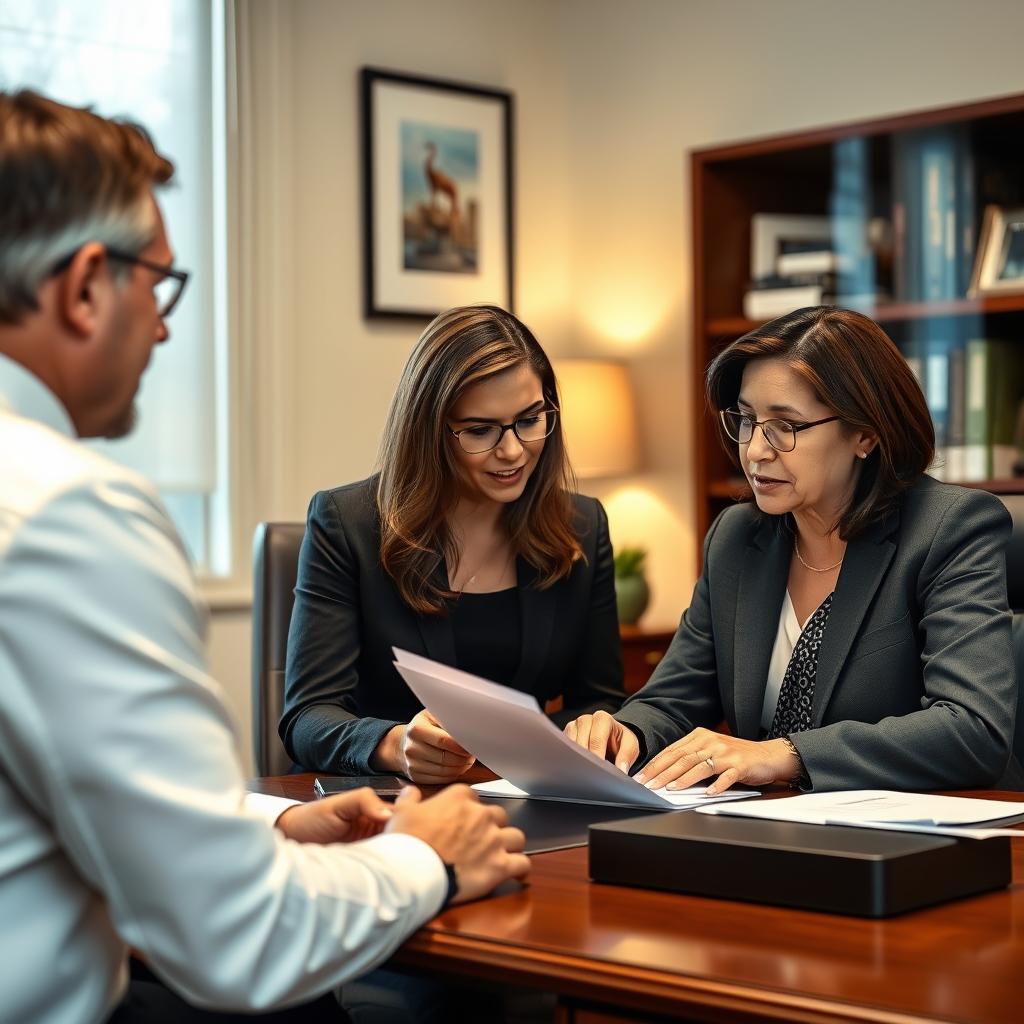
How do I sponsor a family member for a green card from Charlottesville
Sponsoring a family member for a green card from Charlottesville involves filing a visa petition with U.S. Citizenship and Immigration Services and guiding your relative through either adjustment of status or consular processing. If you are a U.S. Citizen or lawful permanent resident living in the Charlottesville area, you may be eligible to petition for certain family members to obtain lawful permanent residence. The process begins with Form I-130, Petition for Alien Relative, which establishes the qualifying family relationship. Once USCIS approves the petition, your family member can apply for the green card itself—either from within the United States through adjustment of status or from abroad through consular processing at a U.S. Embassy or consulate. Charlottesville residents submit affirmative applications to the USCIS Washington Field Office in Fairfax, while removal proceedings and certain contested matters are heard at the Arlington Immigration Court. The specific steps, required documentation, and processing times vary depending on the family relationship, the beneficiary’s location, and current USCIS caseloads. For guidance on your specific situation, reach Mr. Sris and the firm’s Of Counsel attorneys at (888) 437-7747. Law Offices Of SRIS, P.C. – Advocacy Without Borders.
Understanding the Family Green Card Sponsorship Process
Family-sponsored immigration is governed by the Immigration and Nationality Act, which establishes categories of family relationships that qualify for a green card. Immediate relatives of U.S. Citizens—spouses, unmarried children under 21, and parents—are the highest priority and are not subject to annual numerical limits. Other family members, including adult children, siblings, and certain relatives of lawful permanent residents, fall into family preference categories with annual caps and, in some cases, multi-year waiting periods.
For Charlottesville residents, the practical path forward depends on where the intended beneficiary lives. A family member already in the United States who entered lawfully may be able to adjust status without leaving the country, filing Form I-485 with USCIS. A family member residing abroad must generally complete consular processing through the U.S. Department of State, attending an interview at a U.S. Embassy or consulate in their home country. Both routes require an approved I-130 petition as the foundation. The USCIS Washington Field Office processes affirmative applications from the Charlottesville area, while the Arlington Immigration Court handles contested removal matters and certain defensive filings. The firm’s Of Counsel attorneys assist with family-based petitions, adjustment of status, consular processing, and related immigration matters for individuals and families throughout the Charlottesville community.
Frequently Asked Questions
How do I sponsor a family member for a green card?
Sponsoring a family member for a green card requires filing Form I-130 with USCIS, establishing a qualifying family relationship, and then completing either adjustment of status or consular processing. The petitioner must be a U.S. Citizen or lawful permanent resident, and they must demonstrate the ability to financially support the intending immigrant through an affidavit of support. The I-130 petition provides evidence of the relationship—such as birth certificates, marriage certificates, or adoption decrees. Once USCIS approves the petition, the case moves to either the National Visa Center for consular processing or, if the beneficiary is eligible and present in the United States, to the adjustment-of-status stage. The firm’s immigration attorneys assist Charlottesville families with petition preparation, evidence gathering, and navigating the procedural requirements at each stage of the sponsorship process.
Who is eligible to sponsor a family member for a green card?
U.S. Citizens and lawful permanent residents who are at least 18 years old and domiciled in the United States may sponsor qualifying family members, provided they meet income requirements. A U.S. Citizen may petition for a spouse, child, parent, or sibling. A lawful permanent resident may petition for a spouse or unmarried child. The petitioner must file an affidavit of support on Form I-864, demonstrating household income at or above 125 percent of the federal poverty guidelines. If the petitioner’s income does not meet the threshold, a joint sponsor may be used. The petitioner must also be domiciled in the United States. For Charlottesville residents, the firm evaluates the petitioner’s eligibility, identifies potential obstacles such as insufficient income documentation or domicile questions, and recommends strategies to strengthen the petition before filing.
Which family members qualify for a family-sponsored green card?
Qualifying relationships fall into two broad categories: immediate relatives, who are not subject to numerical limits, and family preference categories, which have annual visa caps. Immediate relatives include spouses, unmarried children under 21, and parents of U.S. Citizens. Family preference categories cover adult children of U.S. Citizens, spouses and children of lawful permanent residents, and siblings of U.S. Citizens. The preference categories are subject to per-country numerical limits, and wait times can range from months to many years depending on the category and the beneficiary’s country of origin. The relationship must be documented with reliable evidence—a marriage certificate, birth records, or adoption papers—and the firm helps Charlottesville clients gather and authenticate the required documentation before filing with USCIS.
What forms do I need to file for a family green card?
The foundational form is the I-130, Petition for Alien Relative, followed by either the I-485 for adjustment of status or the DS-260 for consular processing. The I-130 establishes the qualifying family relationship and must be filed with supporting documents such as proof of the petitioner’s status, evidence of the family relationship, and photographs. If the beneficiary is in the United States and eligible, Form I-485 is filed concurrently or after I-130 approval. If the beneficiary is abroad, the case proceeds to the National Visa Center after I-130 approval, where the DS-260 immigrant visa application is completed. Additional forms may be required, including the I-864 affidavit of support and the I-693 medical examination report. The firm guides Charlottesville families through the form selection and filing process appropriate to their specific circumstances.
How long does the family green card process take?
Processing times for family green cards vary widely: immediate relative petitions often take 8 to 14 months from filing to green card issuance, while family preference categories can involve waits of several years or longer. The timeline depends on the category, the USCIS caseload, and the beneficiary’s country of origin. Immediate relatives are not subject to visa caps, so their cases typically proceed more quickly. Family preference categories, however, are limited by annual numerical caps, and applicants from countries with high immigration volume—including India, Mexico, China, and the Philippines—may face extended backlogs. For Charlottesville applicants, the USCIS Washington Field Office processes affirmative applications, and the firm monitors processing trends to provide realistic timeline estimates for each client’s situation. Timelines are subject to change based on USCIS policy and resource allocation.
What is the difference between adjustment of status and consular processing?
Adjustment of status allows a qualifying individual already in the United States to obtain a green card without leaving the country, while consular processing requires the beneficiary to complete the visa process at a U.S. Embassy or consulate abroad. Adjustment of status is generally available to individuals who entered the United States lawfully, have maintained their status, and are not subject to bars on admissibility. The process involves filing Form I-485 with USCIS and attending an interview at a local field office. Consular processing applies when the beneficiary is living outside the United States or is ineligible for adjustment of status. After I-130 approval, the case is transferred to the National Visa Center and then to the appropriate consular post for an interview. Charlottesville residents work with the firm to determine which path is available and advisable based on the beneficiary’s circumstances.
How much does it cost to sponsor a family member for a green card?
USCIS filing fees for a family green card include $675 for Form I-130, $1,440 for Form I-485 if adjusting status, and $85 for biometrics services, with additional Department of State fees for consular processing. The I-130 petition fee is paid at filing. If the beneficiary adjusts status, the I-485 fee and biometrics fee are paid to USCIS. For consular processing, the immigrant visa application fee and the affidavit of support review fee are paid through the National Visa Center. Fee waivers on Form I-912 may be available for income-eligible applicants. Attorney fees vary based on case complexity. The firm discusses the total anticipated costs during an initial consultation so that Charlottesville families can plan accordingly before beginning the sponsorship process. USCIS periodically adjusts its fee schedule, so current figures should be confirmed at the time of filing.
What if my family member is already in the United States?
A family member already in the United States may be eligible for adjustment of status if they entered the country lawfully, are otherwise admissible, and an immigrant visa number is immediately available. Adjustment of status is filed with USCIS on Form I-485, supported by the approved or concurrently filed I-130 petition. The applicant must demonstrate lawful entry, continuous lawful status, and no disqualifying criminal or immigration history. In some circumstances, a family member who overstayed a visa but is an immediate relative of a U.S. Citizen may still adjust status. For beneficiaries in removal proceedings, the case shifts to the Arlington Immigration Court, where the firm’s Of Counsel attorneys may present the adjustment application before an immigration judge. Each case is fact-specific, and the firm evaluates the individual’s eligibility before recommending a course of action.
What if my family member lives outside the United States?
When a family member lives abroad, the green card process proceeds through consular processing at the appropriate U.S. Embassy or consulate after the I-130 petition is approved by USCIS. The approved petition is forwarded to the National Visa Center, which collects the required documentation, fees, and the DS-260 immigrant visa application. Once processing is complete, the case is scheduled for an interview at the consular post in the beneficiary’s home country. The interviewing officer verifies the family relationship, reviews the affidavit of support, and determines admissibility. If the visa is approved, the beneficiary enters the United States and becomes a lawful permanent resident upon admission. Charlottesville petitioners work with the firm to prepare the petition and supporting documents, respond to requests for evidence, and guide the family member through the consular interview process.
Where are immigration applications from Charlottesville processed?
Affirmative immigration applications from Charlottesville residents—including family petitions, green card applications, and naturalization requests—are processed at the USCIS Washington Field Office in Fairfax, Virginia. Immigration court proceedings for Charlottesville-area residents, including removal defense and certain asylum applications, are heard at the Arlington Immigration Court. The USCIS field office at 2675 Prosperity Avenue in Fairfax handles interviews for adjustment of status and naturalization. Some applications may also fall within the jurisdiction of the Sterling Immigration Court or the Annandale Immigration Court, depending on procedural posture. The firm’s Shenandoah Location serves the Charlottesville community, and Mr. Sris and the firm’s Of Counsel attorneys appear at these courts and USCIS offices on behalf of clients. Contact the firm at (888) 437-7747 to discuss your immigration matter and the appropriate processing location for your case.
About Mr. Sris and the Firm’s Of Counsel Attorneys
Mr. Sris, Owner and Founder of Law Offices Of SRIS, P.C., founded the firm in 1997 and brings a background as a former prosecutor to the firm’s immigration practice. Admitted in Virginia, Maryland, the District of Columbia, New Jersey, and New York, Mr. Sris has accepted referrals from officials at the Embassy of India and Indian consular missions for legal matters involving Indian nationals and consults with Indian nationals on U.S. Legal affairs. Mr. Sris testified before the Virginia House Courts of Justice Committee in support of 2019 HB 635 (chief patron Del. David Bulova). The firm’s Of Counsel attorneys bring extensive combined legal experience and assist with family-based petitions, adjustment of status, consular processing, deportation defense, and related immigration matters. Together, Mr. Sris and the firm’s Of Counsel attorneys work to achieve favorable outcomes for Charlottesville families. Results may vary. For a consultation, reach the firm at (888) 437-7747.
Related pages for Charlottesville immigration matters:
Charlottesville immigration lawyer |
Family green card lawyer in Charlottesville |
Adjustment of status lawyer in Charlottesville |
Spouse visa lawyer in Charlottesville |
Fiancé visa lawyer in Charlottesville
Official resources:
U.S. Citizenship and Immigration Services |
Executive Office for Immigration Review |
Virginia Judicial System
Attorney advertising. Prior results do not guarantee a similar outcome.
Results may vary. Case results depend on a variety of factors unique to each case. Engaging Law Offices Of SRIS, P.C. Requires a signed engagement agreement.
© 1997-2026 Law Offices Of SRIS, P.C.